Creative writing from the Conscious I- thoughts, reflections and ideas expressed in urban literature, Caribbean-themed prose and poetry. This blog celebrates the African Diaspora.
Comrade Dr. Mutulu Shakur has joined the ancestors. Dr Mutulu Shakur was a member of the Black Liberation Army. He was a relentless fighter for African Liberation who never repudiated our anticolonial struggle for freedom. Dr Mutulu Shakur was born in Baltimore and raised in New York City. He came into political life as a teenager as part of the Revolutionary Action Movement (RAM). He subsequently joined the Republic of New Afrika and then the Black Liberation Army.
Dr Mutulu Shakur was a licensed Acupuncturist and organised against the heroine epidemic placed upon our community as part of the counterinsurgency war waged on the African Revolution of the 1960s by the US government. His organizing is chronicled in the documentary Dope is Death.
Dr Mutulu Shakur spent 36 years captive in the colonial prison system in the US. He was recently released in November 2022. He had bone cancer. Dr Mutulu Shakur was the husband of Afeni Shakur and stepfather to Tupac Shakur.
May Comrade Mutulu Rest In Uhuru! We must continue our struggle until Africa is redeemed and all Africans are free!
The lyrics and the flow to this song caught me hard, the words got me hooked.
" ... Black is people naming your countries on what they trade most, Coast of Ivory, Gold Coast and the Grain Coast, but most importantly, to show how deep all this pain goes, West Africa, Benin, they call it Slave Coast... loud in our laughter, silent in our suffering, Black is being strong inside the face of defeat, poverty made me a beast, a bout with the law in the streets, well you struggle but your struggle ain't a struggle like me, how could it be, when your people gave us the odds that we beat?... Unconditional love is strange to them, it's amazing them.."
Just a small sample of Dave's art, by a pure artist. Listen, nuh!
The Beginnings and Development of Racism in The U.S.: Some Implications for Black Americans (Part 2)by Dr. Cicely A. Rodway copyright 1987 C. A. Rodway
"To fully appreciate the long history of white racist views which have had such negative effects on all aspects of Black Americans' existence, it is necessary to begin at the very beginning when the first [Africans] were brought to America from the Motherland, Africa."~ Dr. C. A. Rodway; from part 1 of this essay
The first Africans were brought to America in 1619 by a Dutch captain and left in Jamestown, Virginia. At this point in history, Blacks were viewed as simply another aspect of the many-sided economic problems which the white colonists were called on to face. (Jordan, 1968) The colonists gave very little attention to the status of the slaves who were treated similarly to white indentured servants and enjoyed the same status. Therefore, up to 1651, at the end of their service, black indentured servants were "assigned lands in much the same way as was being done for white servants." (Jordan, 1968)
This situation soon changed as the colonists, faced with an unlimited supply of land, needed labor to utilize it. The colonists grew tired of replacing indentured servants whose period of service had expired. They were also faced with the failure of their attempts to use Indian slave labor. The colonists quickly saw a way by which they could solve all their problems at "one fell swoop."
The problem could be solved by placing the negro in "perpetual servitude," which would solve the problem of finding replacements, as there would be an "inexhaustible supply" of Negroes. (Jordan, 1968) This purely economic decision marked the advent of the slave trade in America. It began gradually, but begin it did for by 1640, when Negroes were brought into the country they were no longer given "indentures or contracts and could not look forward to freedom after a specified period of service." (Jordan, 1968) But, it was not until 1661 that there was a statutory recognition of slavery. However, despite the new slave laws, no attempt was made by the colonists to enslave or change the status of the indentured servants who had completed their period of service and were free to live as the chose in Virginia.
This chain of events in Virginia was more or less mirrored in the occurrences in the other Southern colonies, in New York, New Jersey, Pennsylvania and Delaware. By the end of the 1660's, negro slavery was a "fait accompli" in the settled parts of America. There were degrees of harshness in the treatment of slaves and in the attitudes of the colonists toward slavery, as was evidenced by the actions of William Penn in Pennsylvania and the Quakers in New Jersey. Despite this, the final and incontestable fact was that negro slavery had been institutionalized and legalized and was an accepted status for negroes. This was to continue as an accepted part of the fabric of American life until 1865.
How Did Christians Rationalize and Justify Slavery?
It may seem ironic that this new "Christian" country whose stated
basis for establishment was individual freedom and whose enunciated doctrine was built on the "essential equality of all men," (Franklin, 1847) could be involved in the slave trade. The Bible had spoken unequivocally against the evils of slavery and had condemned slave owners. In Exodus 21:16 it was stated, "And he that stealeth a man and selleth him, or if he be found in his hand, shall surely be put to death." So, the colonists in an attempt to appease their consciences set about finding rationalizations for enslaving negroes.
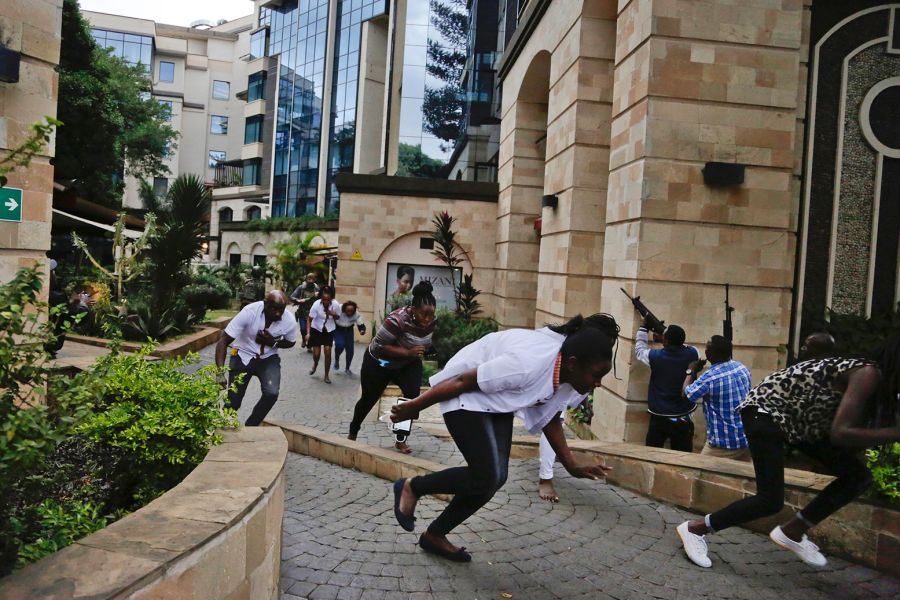
With these latest terrorist attacks in Nairobi, Kenya this past Tuesday (January 15, 2019), there have been many negative images (however realistic and necessary they may be) released for the world to see. In this information age where "shock and awe" is more mantra than mere phrase, sensationalism is the holy grail.
For me though, there are far too many negative narratives of Africa and the African Diaspora. I understand that there is war and crime and violence all over the world and I reason about these realities here on The Abeng and My Conscious Pen regularly. But if all we discuss are negatives, then the narrative of the Black World, our diaspora, will be taken in as all grim and gloom.
But Africa and the African Diaspora are on the move, forward and upward, ever. And in this spirit, I am listing some of the most positive happenings in Nairobi, Kenya.
Five Things To Love About Kenya
1.Growing Economy. Kenya boasts the second largest economy in East Africa. (In 2015, Ethiopia, with a much larger population, overtook Kenya as the largest economy in the region). With a GDP growth rate for the past 5 years at around 5%, Kenya's economic growth is solid and above the United States'. And the projection for 2019: 5.8%.
2.Large, Vibrant Cities. Nairobi is a thriving, dynamic, metropolitan city, where over four million citizens hustle and bustle, repping more than 40 ethnicities. Hundred of multinational companies and NGOs have their East African/Central African regional headquarters located in Nairobi; on top of all that, it's also a tech and creative hotspot.
3.Creative Kenya. One of the most intriguing qualities about Kenya for me as a writer is the fertile environment for creative storytelling. Young storytellers, whether authors or filmmakers, are encouraged to tell compelling stories, though sometimes faced with a government fight against unsavory content.
In April 2018, The Kenya Film Commission (KFC) promoted "My Kenya, My Story", a mobile competition in which they called on young, independent filmmakers to submit their smartphone, film projects. And the annual Slum Film Festival calls on filmmakers from slums and ghettos in Nairobi to submit their films showcasing stories.
Some of Nairobi's stories and storytellers:
Are you in Malindi and would like a copy(is) of any of my books? Hit me up. I am sending a package on Monday and can include yours. pic.twitter.com/LiNFr1eMT5
4. People of African Descent are Repatriating to Kenya Blacks in the African diaspora are moving to Kenya, Nairobi and Mombasa in particular, where we are finding business opportunities in an economic environment that's fertile for entrepreneurs with innovative and sometimes even simple hustles and ideas. For those of us thinking of African repatriation and business, keep in mind that value in any market can be found when a need in that market is identified, qualified and quantified.
When thinking of making Kenya (or any African country) home, or a business location, due diligence is paramount of course.
From Compton, California, Preshley Knight moved from the United States to Kenya after she became extremely ill. She began hustling cakes on the streets in Nyeri, parlayed that into working for a bakery and now has since started up her own company, Wakanda Express Tours and Africa Immigration Consultants.
5. Kenya's Music Scene
While the attack on Nairobi was indeed horrific, that level of violence is not the norm for this thriving, young city. It's a shame that much of the media mainly report news in a way that commands clicks. While some of Africa is indeed at war within itself, most of Africa is on the rise or booming. As black writers, let's be responsible, balanced, logical, compassionate; let's place news about the Motherland in perspective.
The Beginnings and Development of Racism in The U.S.: Some Implications for Black Americans (part 1) by Dr. Cicely A. Rodway copyright 1987 C. A. Rodway
"I am not, nor ever have been, in favor of bringing about in any way the social and political equality of the white and black races; I am not, nor ever have been, in favor of making voters or jurors of Negroes nor qualifying them to hold office... I will say in addition to this that there is a physical difference between the white and black races which I believe will ever forbid the two races living together on terms of social and political equality. And in as much as the cannot so live, while they do remain togerher, there must be the position of superior and inferior, and I as much as any other man am in favor of having the superior position assigned to the white race."
~ Abraham Lincoln 1895
Lincoln, in this statement, presented a viewpoint which was not atypical in his time nor in the times before and after his presidency. It is a viewpoint which is based on the belief that black peoples are inferior to whites. It is a viewpoint which has led to individual and governmental acts and policies which have attempted to dehumanize Black people in the United States and to circumscribe their individual and group efforts.Finally, it is a viewpoint which has had devastating psychological repercussions on blacks as well as whites.
These views are steeped in prejudice, which prejudice as defined by James Jones, "is a negative attitude toward a person or group based upon a social comparison process in which the individual's own group is taken as a positive point of reference." (p. 3) He goes on to point out that the "behavioral manifestation of prejudice is discrimination - those actions used to maintain own-group characteristics and favored position at the expense of the comparison group," (p. 3)
Implicit in a position such as Lincoln's is the need to ensure that the roles of black and white people are clearly defined and positions of inferiority and superiority maintained. In order to ensure that whites maintain the superior position it often becomes necessary to set up structures within the society and to implement policies with this in mind. Carmichael and Hamilton have defined such policies as racism which they define as "the predication of decisions and policies on considerations of race for the purpose of subordinating a racial group and maintaining control over that group." (p. 1)
Individual Racism and Institutional Racism
Carmichael and Hamilton in continuing their discussion of racism in the United States, make a clear distinction between what they refer to as "individual racism" and "institutional racism". Individual racism is described as being overt and is therefore easily recognizable as it manifests itself by causing "death, injury or the violent destruction of property." The second type of racism, institutional racism, is much more insidious as it is less identifiable for it "originates in the operation of established and respected forces in the society." They give us examples of institutional racism, situations in which,
...five hundred black babies die each year because of lack of proper food, shelter and medical facilities, and thousands more are destroyed and maimed physically, emotionally and intellectually because of conditions of poverty and discrimination in the black community... or when black people are locked in dilapidated slum tenements, subject to the daily prey of exploitative slumlords, merchants and loan sharks and discriminatory real estate agents. (p. 4)
Greetings, all Writers, photographers and content creators!
The Abeng and My Conscious Pen is seeking short stories, news reports, articles, profiles and essays from the Black (African) Diaspora. Pieces/work must shed light on the black experience, its struggles and triumphs. Content must be informative, enlightening, inspirational and engaging; writers must express and reveal the human condition. Please keep in mind that an Abeng is a symbol of freedom and Conscious Pen refers to the writer's inward awareness (spiritual, conscientious, psychological) of the outward/worldly object or experience about which he/she is writing.
Sound di Abeng
We are looking for global voices from writers and/or bloggers who wish to utilize our platform so their voices can be heard. Please send submissions to Editor
Tell a friend! *The Abeng and My Conscious Pen does not currently purchase content; if chosen, your work can serve as a published article for your personal portfolio and each writer WILL retain ALL copyrights. Full credit will be given for your writing.
You can also query Editor about being a regular contributor. Regular contributing writers will be given a profile on our page.
Tweet
Artist Javere Irie is a cartoonist with a keen eye for the dramatic. His art invigorates and propels the imagination. The artist has a knack for capturing moments in popular culture and making the images reflect his own narrative. Javere was born in St. Ann's Bay, Jamaica and now resides in Brooklyn, NY. Abeng: So, Javere, how old were you when you first began drawing/painting? What led or drew you to art? Where are you from?
I’m not sure exactly when, but my parents say all my life. I’ve be drawing since I could hold a pencil.
Which Jamaican or Caribbean or Black artists have inspired you?
Basquiat in terms of raw expressive-ness and Bob Marley for his ability to use his art to unite people, elevate Jamaica and fight injustice world-wide.
Which is your favorite medium or style?
Illustration! Nothing beats a pencil, and recently illustration markers have been my latest obsession.
Where do you draw I inspiration?
I would say exploring cultures. The brightness and colors of Jamaica in general definitely inspires me. I’m also intrigued by pop culture and the influence Africa and Jamaica has on it, (from fashion to music), as well as exploring how we view Black culture.
Have you done any exhibits?
Yes, I’ve participated in 7 group exhibitions, 5 in New York, 1 in Washington, DC, and 1 in Connecticut.
Have you met any interesting people or visited any intriguing places through your art?
Not personally, but while in college I won an art contest to have my work exhibited in Gov. Cuomo’s Washington DC Office.
What would you say has been your strongest muse or meditation?
Music (reggae, hip hop and r&b), and animated series like The Proud Family, Teen Titans and Avatar: The Last Airbender always inspire me.
Is your family artistic? Where do you derive your talent?
Yes, my mother is an overall creative being, and her side is very creative as well. Ex. I have an aunt who is a celeb makeup artist in NYC, and an uncle who danced/ choreographs for the National Dance Theatre Company of Jamaica and is a university professor of dance in the US and JA, 2 cousins who have designer cake businesses, and many more who are creative, but recreationally.
Where do you want your art to go? What are your aspirations?
In the long term I’d like to move into animation. I want to create projects that challenge and re-conceptualize the black narrative. I want people to see my work and see beyond the stereotypes they have of Black people. We are too multifaceted to be seen through the limited lens that stereotypes provide. Just like any other group of people we are more than that. I think expanding the narrative allows other people to relate and see our humanity. I think a lot of social issues feed on how easily we dehumanize those who are different from us. If we start to break that down, maybe we can relate a little more over our similarities, and not feel threatened by our differences.
Finish this sentence:
My love is .....
My love is learning. I consume through my art, and share what I learn visually.
Thanks, Kaya! You provided some very thoughtful questions.
Trayvon Martin Protest - Sanford (Photo credit: werthmedia)
I been observing this whole tragedy, this Trayvon Martin incident and couple ah things are as shine, clear and bright like .357 Magnum in the tropical night. First: racial profiling in Amerikkka is prominent. Second: in the shitstem, a young Black life is as insignificant now as it was in the days of Native Son/ Bigger Thomas. And I don't think this perception about the devalued life worth of young Africans/youth of African descent is limited to Amerikkka, it's a global phenomenon.
Imagine that in this age of information or misinformation, people are still being judged by what they wear and how they look. In Truth, Trayvon had a right to be in the neighborhood, his father lived there. What made him suspect? The reasons Zimmerman perceived him as a threat was because he was Black and young. Like Yusef Hawkins and countless others, Trayvon was killed because of his profile, for how he was perceived as a Black youth. You think if Trayvon woulda been White and wearing the said hoodie in the rain in that community Zimmerman woulda track him down and kill him? Listen to the 911 tapes, Zimmerman sounds calculating, like he's setting up a defense for what he knows he wants to do. And when the 911 operator tells him not to follow the retreating Trayvon, Zimmerman ignores the advice and follows the boy anyway. He tracks him down. Confronts. Slays.
Is like if young, Black men are bearing the cross-hairs for crime in societies round di world.
This powerful image first snagged up my attention as a youth when I flipped through a magazine and BRRAAP!- it shat, and has imprinted my imagination for decades. Though I couldn't overstand all the symbolism and implications when I was younger, I felt the power of rebellion exploding from the expression caught in time. Without knowing the fullness, the Black fists raised in salute pounded an impression in my psyche that I will always identify with, truss mi. And as I grew, I deciphered the symbolism embedded in the image, like narrative scribed in hieroglyphics. When I began seriously writing, it was only then that I fully comprehended the strength packed, loaded and framed in this moment.
For those like me who never even born when this incident tek place, it was at the 1968 Olympics in Mexico City during the 200 meter track medal ceremony. In the middle is the winner of the event, Gold Medalist Tommy Smith (USA) and on the right is Bronze Medalist John Carlos (USA). The man on the left is Silver Medalist Peter Norman (Australia).
This action screamed REVOLT for many reasons. The first thing is that political statements are a big NO-NO at the Olympics. Next thing, we talking bout the 60's, the era of the Civil Rights Movement, world wide Black discontent, protests and riots, from L.A. to Detroit to Sharpeville, South Africa. Remember it was the in the Sixties when His Imperial MajestyHaile Selassie declared that "Until the philosophy which holds one race superior and another inferior is finally and permanently discredited..." AND, don't forget, the Bredren were wearing the good ole USA akkkross their chests and representing the land of their birth; yet, they still identified with and declared solidarity with The Struggle of The People.
The Brothers stepped on the podium with their black-socked feet , symbolizing the poverty of Black people in America. Tommie, from Texas, draped a black scarf around his neck that stood for Black pride. John Carlos, a Cuban American from Harlem, wore beads that represented "those individuals that were lynched, or killed and that no-one said a prayer for, that were hung and tarred. It was for those thrown off the side of the boats in the middle passage."
When the Brothers raised their fists in Black Power Salute it was an act of total defiance and a statement of protest against a system that oppressed Black people. (Tommie later declared in his autobiography Silent Gesture that it was a human rights salute)
I must note that Peter Norman, the Australian, stood in protest with Brothers and all three of them wore the badge of the Olympic Project for Human Rights (OPHR). Norman had been outspoken against Australia's White Australia Policy so he empathized with Tommie and John, even suggesting that they each wear one of Tommie's glove after John had forgotten to bring his own pair to the track.
Well yuh done know, the backlash from the statement was tremendous. The Brothers were suspended from the USA Olympic Track Team. Upon returning home, they received death threats from good ole Americans. Tommie Smith said, "If I win, I am American, not a Black American. But if I did something bad, then they would say I am a Negro. We are black and we are proud of being black. Black America will understand what we did tonight."
And overstand we did, Bredren. I think Black people the world over felt you. I give thanks.
How many of us would've had the dignity and courage to express ourselves on the world stage in such a way that would possibly affect our very livelihood?