Related Posts Plugin for WordPress, Blogger...
Get Our Free Newsletter
Showing posts with label African Diaspora. Show all posts

Sunday, January 28, 2024

African Drumming in The African Diaspora: Kwe Kwe (Queh Queh) Drumming

Kwe Kwe Dance Company, Atlanta, Georgia: Drumming at Guyana Day During Atlanta Carnival Weekend 2018


Please Support The Abeng Worldwide (YouTube Channel)... "LIKE" " SHARE"; Hit the "SUBSCRIBE" button https://www.youtube.com/channel/UChrfgzJduw369aS2zldYI5Q


Wednesday, October 16, 2019

Garveyism: Ujamma Is The Abeng Collection Mission

The Abeng Collection: Our Mission - Garveyism 


When Marcus Garvey trod the world in the early 1900s, he noticed that people of African descent filled the lower rungs of the socio-economic ladder in most societies he encountered. Garvey recognised the need for Africans to uplift themselves: mentally, spiritually and economically. He realised the importance that men and women of African descent unite, under one accord, Africa for Africans at home and abroad. He preached cooperative economics (ujamaa) and started black-owned businesses that encouraged world-wide trade between people of African descent. Wherever he travelled, Marcus chanted. "Up, Up, Ye mighty nation, you can accomplish what you will!" 


In the spirit of The Right and Honourable Marcus Mosiah Garvey, The Abeng Collection steps forth with our mission to unite Africans at home and in the diaspora. The principle of Ujamaa (cooperative economics) steeps our mission. By bringing African and African diaspora designers to the world market, we link people together through economics by establishing commerce and trade between Africans in North, South and Central America, the Caribbean and Africa. The Abeng Collection's goal is to control every link in the supply chain, from means of production through distribution to retail. 


"Take advantage of every opportunity; where there is none, make it for yourself!" ~ Marcus Garvey


READ MORE:

The Abeng Collection by House of Dalle: The Abeng Collection, fitted, custom designed clothing with african styles and tones.


Thursday, August 22, 2019

Kaya Omodele's Cries of Redemption eBook on Smashwords at a Special Earthday Price

Cries of Redemption at A Special, Smashwords Rate!


From now through my Earthday in September, I am offering Cries of Redemption on Smashwords for just one dollar. 

My debut book, Cries of Redemption is comprised of Short Stories, Poetry and Essays with themes of the Caribbean and the African Diaspora. The stories are highly vivid and most are didactic or educational, while being entertaining. Along with being literary, this book also makes a great gift for teenagers and college students. It is an exotic and visually appealing coffee table or bedside, nightstand piece.


Saturday, March 30, 2019

Perspectives From The African Diaspora: Know Thyself by Katleho Mpopo

While standing outside my friend's home waiting for her come out, I looked down and after a few seconds I saw a new world- a world of ants and other small insects. If I hadn't been concentrating, I would have taken it as a non-consequential world; it required focus to see it. There, among the bustling ants was one so small, probably a worker, dragging a sand grain twice its size. What caught my attention was the number of grains reduced by one every time one of these tiny workers snatched one up. Someone may argue that one less grain of sand is hardly a change, but that depends on one’s perspective. The bottom line was there was a change, no matter how small; there still was a change. 

It came down on me; we meet people; we hear things, speak and act on things, it does not matter how small they may be; they bring about change, we may not even realize it but the change is there.

When I walk every day, I see people and know each person is a soul striving for fulfillment. Some of us look for it in the wrong places; we seek it in what people say about us, we search for it in what people declare as "perfect". But this validation is really someone else's idea of perfection, and because most of us don't even know ourselves, we rush in every direction they tell us, to satisfy our souls' ultimate need. 
  
I live in a society that affects our subconscience. We are made to believe we aren't enough and that we need to talk, dress, and act, look a certain way; and then, we will be perfect. As a result, we do not realize that we each were born with something unique about us. But society is sabotaging us. We look for ourselves in material things; we look for our worth in the number of followers we have, as cliché as it may be. These things that surround us are dragging off the sand grains in our lives hence changing our own views and beliefs, self-love, self-respect, and self-worth. As long as we don't know who we are, where we come from, what our purpose is and where our purpose drives us, we cannot find contentment in this world.
My grandmother raised me. That woman radiated respect, gracefulness, and wisdom without having to raise a hand. I asked her this one time, how she could command such respect and her answer was simple. She told me she knew herself in and out, and no one would ever intimidate her nor would she ever seek validation from anyone. I did not understand it back then but I do now.
  
Being raised by such a woman propelled me to seek solitude. yet growing up and crossing paths with so many people, I've learned  that although we are all different, we seek the same thing which is soul satisfaction. My grandmother found that in herself. We need to find ourselves and understand who we truly are. 

Yes, life is hard and things happen that force us to ask ourselves questions that can shake the foundation of who we believe ourselves to be; the responsibility we have is to learn and improve, always. Outside forces like the media, in all its glory,  tell us what we should be; but we need to know who we are and build strong unshakable foundations of ourselves. So our souls won't gradually reduce, speck by speck, like grains of sand carried off by ants.


Katleho Mpopo is a 22-year-old student at the National University of Lesotho, in Roma, Lesotho, where she studies Economics. 

Katleho grew up in rural Khukune, which is in the Butha-Buthe District. Her grandmother raised her, "along with my 13 other cousins, aunts and uncles while our parents went about finding work." 

When this young Sister realized that in her community, the only affordable food offered by the food industry is junk food, Katleho began plans to offer health and wellness food. "Basically, we consume a lot of junk food just because it is cheap, cheaper than healthy food. That's also why I am studying Economics at NUL; so I get to understand how the company can be competitive, how it can survive and thrive even in times of recession."


Wednesday, March 6, 2019

SmashWords' Read An eBook Free Week Offers Cries of Redemption Through March 9th

Cries of Redemption is free on Smashwords through March 9th as a part of their Read an Ebook Week. You can now make my book,part of your digital collection. Cries of Redemption illustrates the struggles of maafa in America and the Caribbean; it celebrates the African Diaspora, the Black Experience, and pan-Africanism. 

"A new #Caribbean voice from the diaspora who, 'Now wants to flutter throughout the world, dipping and dashing and lifting up with rhythm of the winds, the winds of change.
This is a masterpiece of literary writing that draws on [his] experiences... The writer is 'writing to keep warm' but he keeps us all warm with his intelligence and keen observation of the broad sweep of life."
Jan Augustin
Lecturer (Language and Communication).
Antigua State College. Eastern Caribbean


"Cries of Redemption" is a travel guide to consciousness. It is a beautiful rendition of the author's journey through life, his observations, and his reflections, all captured in prose and poetry that reflect the influences on his life. K. Omodele takes us on that journey...revealing relationships between the freedom of the mind and the imprisonment of the body, the rebellious child and the wizened adult, the unconscious instinct and the focused mind.
This is a book for minds seeking the intervention of truth and beauty in the midst of social and political chaos, confusion, racism and ugliness."
Kojo Nnamdi,
Host,
The Kojo Nnamdi Show,
WAMU FM,
Washington.


Sunday, January 20, 2019

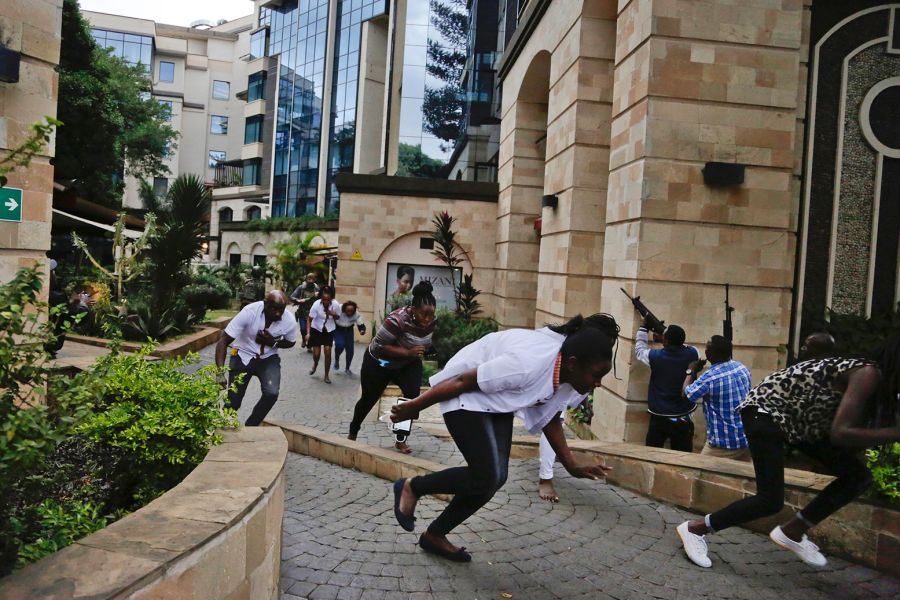
Five Things About Kenya That Terrorism Will Not Shadow

Let's Talk Nairobi, Kenya
by Kaya Omodele @TheAbeng 


From: https://www.stripes.com/news/africa/al-shabab-says...
With these latest terrorist attacks in Nairobi, Kenya this past Tuesday (January 15, 2019), there have been many negative images (however realistic and necessary they may be) released for the world to see. In this information age where "shock and awe" is more mantra than mere phrase, sensationalism is the holy grail. 


For me though, there are far too many negative narratives of Africa and the African Diaspora. I understand that there is war and crime and violence all over the world and I reason about these realities here on The Abeng and My Conscious Pen regularly. But if all we discuss are negatives, then the narrative of the Black World, our diaspora, will be taken in as all grim and gloom. 

But Africa and the African Diaspora are on the move, forward and upward, ever. And in this spirit, I am listing some of the most positive happenings in Nairobi, Kenya.


Five Things To Love About Kenya


1. Growing Economy. Kenya boasts the second largest economy in East Africa. (In 2015, Ethiopia, with a much larger population, overtook Kenya as the largest economy in the region). With a GDP growth rate for the past 5 years at around 5%, Kenya's economic growth is solid and above the United States'. And the projection for 2019: 5.8%.


2.  Large, Vibrant Cities. Nairobi is a thriving, dynamic, metropolitan city, where over four million citizens hustle and bustle, repping more than 40 ethnicities. Hundred of  multinational companies and NGOs have their East African/Central African regional headquarters located in Nairobi; on top of all that, it's also a tech and creative hotspot.


3. Creative Kenya. One of the most intriguing qualities about Kenya for me as a writer is the fertile environment for creative storytelling. Young storytellers, whether authors or filmmakers, are encouraged to tell compelling stories, though sometimes faced with a government fight against unsavory content.


In April 2018, The Kenya Film Commission (KFC) promoted "My Kenya, My Story", a mobile competition in which they called on young, independent filmmakers to submit their smartphone, film projects. And the annual Slum Film Festival calls on filmmakers from slums and ghettos in Nairobi to submit their films showcasing stories. 


Some of Nairobi's stories and storytellers:


4. People of African Descent are Repatriating to Kenya Blacks in the African diaspora are moving to Kenya, Nairobi and Mombasa in particular, where we are finding business opportunities in an economic environment that's fertile for entrepreneurs with innovative and sometimes even simple hustles and ideas. For those of us thinking of African repatriation and business, keep in mind that value in any market can be found when a need in that market is identified, qualified and quantified. 
When thinking of making Kenya (or any African country) home, or a business location, due diligence is paramount of course.


From Compton, California, Preshley Knight moved from the United States to Kenya after she became extremely ill. She began hustling cakes on the streets in Nyeri, parlayed that into working for a bakery and now has since started up her own company, Wakanda Express Tours and Africa Immigration Consultants.


5. Kenya's Music Scene


While the attack on Nairobi was indeed horrific, that level of violence is not the norm for this thriving, young city. It's a shame that much of the media mainly report news in a way that commands clicks. While some of Africa is indeed at war within itself, most of Africa is on the rise or booming. As black writers, let's be responsible, balanced, logical, compassionate; let's place news about the Motherland in perspective.  

Sources:
 https://www.aljazeera.com/news/2019/01/kenya-al-shabab-target-190117054949463.html

https://www.theeastafrican.co.ke/oped/comment/Kenya-creatives-industry-movies-support/434750-4382088-5y5f81z/index.html

https://www.kenyanvibe.com/the-kenya-film-commission-calls-for-entries-from-young-filmmakers/

https://www.npr.org/sections/goatsandsoda/2015/09/03/436617865/he-had-one-week-to-make-a-movie-for-the-slum-film-festival

https://www.vogue.com/article/the-kenyan-cool-girls-guide-to-nairobi

https://www.kenyanvibe.com/top-10-hip-hop-artists/


Wednesday, November 7, 2018

The Abeng Collection: Practicing Garveyism

The Abeng Collection by House of Dalle: Application of Garveyism 

"Be Black, buy Black, think Black, and all else will take care of itself." ~ Marcus Mosiah Garvey
Holding fast to Garvey's vision by bringing members of the African diaspora into a creative collective and economic cooperation, The Abeng has partnered with Benny Dalle to bring forward The Abeng Collection by House of Dalle. Our new collaboration injects Afrocentric styles and ideas into fashion but also reflects principles that Garvey and so many other leaders propagated, self-sufficiency through building black businesses and trade. 
"For many years white propagandists have been printing tons of literature to impress scattered Ethiopia, especially that portion within their civilization, with the idea that Africa is a despised place, inhabited by savages, and cannibals, where no civilized human being should go, especially black civilized human beings. This propaganda is promulgated for the cause that is being realized today. That cause is colonial expansion for the white nations of the world."Marcus Mosiah Garvey

House of Dalle Bernadette "Benny" Dalle is a creative, hard-working young woman living in Lagos, Nigeria who began designing and sewing her own clothes because, she longed to wear the latest fashions she saw in magazines, on TV and online. Her attention to detail is amazing and if you know Benny, you know she works her finger to the bone. Benny is the sole owner of House of Dalle, which creates custom clothing and keeps three people (two who are tailors) in Lagos employed.


The Abeng Collection


I, Kaya, don't know a thing about sewing or tailoring; I just love wearing what I like wearing. But I've dreamed about starting a business that would bring people of the African diaspora together and serve as a vessel for economic empowerment. I really wanted to create a venture where people of the African diaspora could control the supply chain, from manufacturing straight down to the user. 

The Abeng Collection is custom, fitted clothing and we just received our first shipment all the way from Lagos. I look forward to growing our partnership and business and am extremely proud to collaborate with Benny. Today, we're a humble hustle but with nuff  brain pumping and eye-brow furrowing, we goh definitely wave Garvey flag and turn this into a proud, black-owned business. 


"We must give up the silly idea of folding our hands and waiting on God to do everything for us. If God had intended for that, then he would not have given us a mind. Whatever you want in life, you must make up your mind to do it for yourself." ~ Marcus Garvey   

Marcus Garvey quotes about reading.


The Abeng Collection


Wednesday, September 26, 2018

Blessed Earthday, Winnie Mandela

Bless Up, Winnie Madikezela Mandela... Blessed Earthday.
 Amandla! You meant so much to so many all across the African Diaspora and around the world.

We love you, Mama. Never Gone! Never Forgotten!


Sunday, September 23, 2018

Perspectives From The African Diaspora: Seven Names in a Lifetime

African Diaspora: Seven Names in a Lifetime
written by Nana Kwabena Osei-Boadi (kongo wattu)


Akan culture says a human being lives to be called seven names in a lifetime.
1. Asukɔnoma - the water fetching bird. Feeds in fluids. Breastmilk, water, porridge, etc.
2. Abɔfra - just a part of creation and at peace and in harmony with nature. Crawling in all fours, eating earth does no harm. They tug on the dog's tail and the dog enjoys it.

3. Akoadaa - Always the slave. The being is up and standing and has learnt to walk and run. Enjoys running errands with the new abilities.
4. Aberaanteɛ (male) - the one who disobeys rules. Puberty and adolescence. Wɔ hyɛ mmra anaa wɔ bra no a ɔnnte.
Ababaawa (female) - the fashionable one. W'aba so. Fantse Akans refer to this stage as Akataasiewa. The one who should be covered and hid. At this stage the gender of the being is taken into consideration for the first time..
5. Opaanii - the worker. Odi paa.
6. Abansiriwa - the senior citizen who protects the walls from collapsing. The experienced one who is in a position to give help with wisdom or saved finances after a long working life.
7. Aberɛwa (female) - the tired one. Nea wabrɛ.
Akɔkora ( male) - the one who is indoors and out of sight. Wakɔ kora.

After having been called these seven names the person after death has a black stool placed in the family prayer room or shrine (nkondwadan mu). When prayers are said and ancestors are listed and called upon to carry the prayers into the spirit world and the creator, their names (akradin) are mentioned.
Food for Thought.
Ase
~ Nana Kwabena Osei-Boadi; Kongo Wattu


African culture is rich in traditions. Many of us in the African diaspora have retained and/or reclaimed many of our traditional customs. 


Sankofa - "Go back and get it"; reconnect with the past and learn from it


Monday, July 30, 2018

Abeng Op-Ed: Trevor Noah Wasn't Wrong About Africans Born in France

After France won the 2018 FIFA World Cup earlier this month, South African comedian Trevor Noah cracked a joke about the fact that France's victory was also an African accomplishment, since so many players on the French national team are of African descent. I and many people of African descent around the world hold similar views. As a matter of fact, many of us posted our comments and expressed our sentiments all over social media. Personally, I supported Senegal and Nigeria (the two Sub-Saharan African countries in the tournament), then I cheered for other teams with players of African descent as well. From my pan-African eyes, I love to see all people in the African diaspora excel. But is this, my perspective, racist?

"No Matter Where You Come From" / "I Know No National Boundary"
I grew up in an era when blacks in the African diaspora were reclaiming our roots. Omodele is a name my mother chose, Tesfa and Feyishola and Shango and Imani and Sudi are some of my cousins; Shaka and Dingane and Olatunji are some of my childhood, family friends. My mother and her sisters and brothers celebrated everything African. She was the younger sister and close friend to true life revolutionaries. Black culture was exalted; Fela, Miles, Hugh, Satchmo, Marvin, and them were Kings. "No Matter Where You Come From" by Peter Tosh was the national anthem. And Madiba was a living martyr. (When I was just fifteen, my cousin and I marched in a Free Nelson Mandela rally in Central Park) So, I know no national boundary where black people are concerned, the whole world is my province...

So, like many blacks in the Diaspora, I was turnt up that France's winning World Cup squad was comprised of so many players of African descent. When a French ambassador chastised Trevor Noah for bigging up the African-ness of Les Bleus (The Blues), pointing out that the black French players were French nationals, French-born, and trained in France, I understood this ambassador's view - that no matter these players were sons of immigrants, they were French, regardless of race or religion. And I admit that's seems a commendable and noble view coming from the French diplomat. My biggest question, is this a case of "You're not like those others."?

A couple years ago, I interviewed the Quai54 Streetball creator Bah-Pna Dahane, a French national of Chad origin, who stated in that interview:
"France's racism is different than the United States'; France's racism is more subtle...like a gas you can't smell but will kill you slowly from the inside."
And, I've read lately about racism rearing its head during the selection process of this said French national team. So, although the ambassador has good intentions, maybe, we won't pretend that brothers and sisters living in France don't feel marginalized, at the very least.
I'd love to hear from our French bredren.


Tuesday, October 17, 2017

The African Diaspora: Scenes From Kingston - Maxfield /Whitfield Ave. Area

Scenes From Kingston, Jamaica

(Maxfield, Whitfield areas)


Throughout the African diaspora, in communities where poverty persists, reliable water for drinking, cooking and washing can be a major problem. Outdated water-works systems contribute to mainline leakage and water shortage. Water pressure is often low and water cuts can last for days

at a time.


Standpipe


The African Diaspora: "Pure" Drinking Water in Nigeria

Scenes from Nigeria-  Pure Water

.@theabeng 


In Nigeria we call it “pure water”.
Benny @TheAbeng
Africa
It's water for the poor even though it’s not all the poor that can afford it. The price is 10 naira.
We also have tap water they sell in a bucket; one bucket is 10 or 20 Naira. People who can afford it will go for the tap water, while table water is 50 naira.
Because clean drinking water is often a problem for poor people, "Pure water" has been a means to sustain life in many part of Nigeria.
It’s also a means of livelihood - people sell it to earn a living. Even though I’m not 100 percent sure about the hygiene, I think it has helped so many lives.

Sometimes even the poorest people can afford it. And when you walk in some of the streets of Lagos, you will see pure water used packs everywhere; and, that is a sign that its helping lives.


~ Benny Dalle ; 

Benny @ The Abeng Africa
#abeng
#africandiaspora


Friday, March 17, 2017

WANTED: Abeng Guest Writers


Greetings writers and bloggers!
The Abeng and My Conscious Pen is seeking short stories, news reports, articles, profiles and essays from the Black (African) Diaspora. Pieces/work must shed light on the black experience, its struggles and triumphs. Content must be informative, enlightening, inspirational and engaging; writers must express and reveal the human condition. Please keep in mind that an Abeng is a symbol of freedom and Conscious Pen refers to the writer's inward awareness (spiritual, conscientious, psychological) of the outward/worldly object or experience about which he/she is writing.
We are looking for global voices from writers and/or bloggers who wish to utilize our platform so their voices can be heard. Please send submissions to editor.theabengblog@gmail.com

Bless up; don't stress up!

*The Abeng and My Conscious Pen does not currently purchase content; if chosen, your work can serve as a published article for your personal portfolio and each writer WILL retain ALL copyrights. Full credit will be given for your writing.

You can also query editor.theabengblog@gmail.com about being a regular contributor. Regular contributing writers will be given a profile on our page.

Wednesday, October 26, 2016

Poem: Roots - For Women of The African Diaspora

Roots by Caribbean Poet Cicely Rodway 
(from her book of poems Facing The Wind; 2009)

FOR WOMEN OF THE AFRICAN DIASPORA

Her roots are deep
many bloods cruise through her veins
yet she can trace with certainty
her beginnings.

She comes from a long line
of strong woman
the spirit of goddesses runs through
her
the spirit of earth and
sun goddesses
spirits of the elements
the forces
of life
rest in her.

Spirit of Oya
Yoruba goddess of winds
and tempests
Oya
The Strong Protectress of Women
Yes, she comes from a long line
a long line of strong women.
She springs from survivors
from enslaved women
from women
who struggled to be free.
Now,
made stronger by this history
Bathed in the power of her ancestors
strengthened by the faith
and works of sisters
she shapes the world.

Wednesday, October 12, 2016

Chatting Lyrics: The Oral Tradition of Storytelling

The Oral Tradition of Story Telling 
(Spoken Word in Dancehall)
By Kaya Omodele
(first published as Lyricist Chat for Method Mecca @ZigZee)

The oral tradition of storytelling is intricately woven into African culture and throughout the ages griots/djeles/jelis have relayed didactic stories, ripe with history and moral values, from one generation to the next. Since many cultures in Africa had little or no written archives, these storytellers were revered, as it was they who transmitted the peoples' history, knowledge, wisdom, and moral understanding. An essential component in African oral tradition is its integration of music, which has continued in various cultures throughout the African Diaspora.

The spoken word aspect in dancehall, calypso, soca and other genres of Caribbean music communicates message, experience, social commentary and parody, much like the griots/djeles of old. And when it comes to dancehall, I rate an artist by lyrical content, first and foremost, even more than feeling the vibes of the song. Captivate me first with spoken imagery- make me think; then, the vibes in his/her style and flow can hold me.
Now don't get me wrong, I have liked songs now and again, when the artist not really saying nuttn much, but he/her is riding the riddim with style. And sometimes a song will grow on me if the lyricist's words have a great flow; because after all, it's not just what you say, it's also how you deliver. Like:

Ting-a-ling-a-ling, school bell ring/dee-jays' ears cock-up when them hear boom riddim... - Shabba Ranking

However, I highly rate the spoken word-sound as power; and since lyricists are supposed to be masters of words, I hope dancehall artists will continue the oral tradition of storytelling. Dancehall culture should never stray from the early years when dee-jays were street commentators, reporting the mood of the people live from the street, relating their experiences and carrying the flame of the African griots, the original sounders of the oral tradition, spoken word.

Wednesday, September 14, 2016

Perspectives from the African Diaspora: Repatriation To Africa (The Business Climate in Africa in the New Millennium)

African Repatriation: Journey Back To The Continent
Written by Joshua Chikudo; Edited by K. Omodele @TheAbeng

Ever since I was a little boy growing up in Southern Africa, Africans have left the continent in search of so-called greener pastures abroad. These Africans had professional ambitions, sought better living conditions and wanted to explore the world. Many became doctors, lawyers, tech professionals, financial gurus, etc. But then, due to declining opportunities in their adopted countries, some were forced to accept jobs for which they were overqualified. For example, some of these Africans who migrated with advanced degrees settled for jobs as domestic helpers, chauffeurs, care givers, security guards, construction workers. In recent tears, I have seen an increasing number of these migrants returning home to Africa, raising hopes that the brain drain has been reversed.

Whereas previous policies, such as those built on socialist principles, drove away investors, today, Africa offers great economic opportunities, with better governance, improved property rights and respect for human rights.


Economic growth in the continent is expected with governments prioritizing political stability and opening free-market economies, which has in turn lured foreign investment. Of course, corruption is another major catalyst that deters foreign direct investment - by multinational companies and Africans of the Diaspora. Many citizens of African nations now welcome new, relentless anti-corruption campaigns. A noticeable example is Rwanda, East Africa, where President Kagame has introduced a one-stop solution which combines all the government agencies responsible for the investment process under a single roof, thereby reducing time loss, the possibility of corruption and other unnecessary deterrents to investment.

In East Africa, the formation  of the East African Community (E.A.C) has a potential 130 million customers. A decade (2004-2013) of 6.2 percent economic growth rate* has piqued investors' interest. American power-houses like GE and Microsoft have found new homes in East Africa, creating jobs that attract skilled workers and professional talent from the African Diaspora.

In West Africa, market growth appeals to the Diaspora community and encourages foreign investment. The market capital of the West African Regional Stock Exchange grew to US$ 15.1 billion last year, up 9% from 2014 (Wall Street Journal, 2016). The eight French-speaking countries** in West Africa that share a common currency( the CFA franc*** ) also share the stock exchange, which is based in Abidjan, Ivory Coast. The presence of multinational corporations has created employment, not only for locals, but also for repatriating Africans.

The Southern African Development Community (S.A.D.C) welcomes those returning Africans with open arms. Economic and infrastructural development in Mozambique, Congo and Angola have been attracting an experienced labor force of engineers, etc. Countries that had once possessed heavily-regulated economic adjustment programs have openly debated their policies and readjusted them in order to attract investors. The S.A.D.C has a potential of over 220 million consumers and now encourages free and open trade.

The North African region has experienced the aftermath of the Arab Spring uprising, which initially slowed down economical growth. The region, like much of Africa, has been hobbled by political ineptitude and corruption which contributed to migration. Egypt's government, however, has introduced reform through new investment laws that have afforded investors more protection and have created one-stop shops which eliminate long waiting periods for licenses from government agencies. Today, foreign companies are partnering with North African companies to launch joint ventures in viable markets. Such is the case with Vice Media which, in launching Viceland Africa, has created hundreds of media jobs in North Africa. (Wall Street Journal, 2016)

Because of this new, positive climate in private business sectors, Africans in and around the Diaspora are now considering repatriating. Besides the potential for economic growth in Africa, the xenophobic back lash against African immigrants combined with economic uncertainty across Europe has contributed to Africans, and African descendants, reconsidering the future.  Some have already repatriated and have begun business start-ups, thereby creating more domestic revenue and opportunities for local workers. The future for the continent is bright; the political environment is more stable than ever. The business climate of Africa in this current epoch, this age of information, is conducive to bringing in investment, especially for those in the African Diaspora.

* In the top 20 percent of "the distribution of 10-year growth rate world-wide since 1960." (IMF Working Paper African Department: How Solid Is Economic Growth in the East African Community? Prepared by Nikoloz Gigineishvili; Paolo Mauro; Ke Wang)

** Benin, Burkina Faso, Guinea-Bissau, Cote d'Ivoire, Mali, Niger, Senegal, and Togo

***CFA - Commicaute Financiere d'Africque (Financial Community of Africa)

Joshua Chikudo began his business career in the hotel and casino industry and has over 14 years of experience in business development. He has a long and successful track record helping investors from all over the globe structure and seal investments in a number of countries in Africa, Europe and across North America. Joshua Chikudo combines extensive entrepreneurial experience in various markets with a deep commitment to rebranding and rebuilding Africa. In 2006, he created Consulting JC, a consulting firm that maintains up-to-date market analysis and data, educates clients about socio-political environments in emerging markets and developing countries while proactively seeking new opportunities. 

Mr. Chikudo is passionate about new construction technology that is durable, affordable, energy efficient, and pest- and disaster-resistant (such as Organo and Structural Insulated Panels) that provide solutions in building Africa and countries in the developing world.
Related Posts Plugin for WordPress, Blogger...

Featured Post

Spoken Word Griots: African Oral Tradition in Caribbean Music (Third Part) - Calypso

Spoken Word Griots: African Oral Tradition in Caribbean Music (Third Part) - #Calypso by K. Omodele African traditions and customs are i...

Popular Posts