Related Posts Plugin for WordPress, Blogger...
Get Our Free Newsletter
Showing posts with label Rastafari. Show all posts

Thursday, April 14, 2022

Bad Friday 1963: The Rastafari Persecution at Coral Gardens


Coral Gardens lies on the North Coast of Jamaica, W.I., in the eastern outskirts of
Montego Bay; it's a part of the Rosehall Estate. Back in the late 1950s and early 1960s, groups of Rastafarians squatted on the land and farmed ganja on a small scale in the area. The landowners and businessmen around Coral Gardens had it in their minds to make the area a tourist haven, but Rastas stood in the way. Tension engulfed the authorities and Rastas like thick ganja smoke.

Now this is before Bob Marley and other reggae artists helped swing Rastafari into the mainstream. Back then, anti-Rasta sentiment choked much of Jamaican society. Many saw Rasta locksmen as vagrants, degenerates, and even referred to them as "Blackheart Man"; and police and people would often gang up on Rastas, beat them and sometimes kill them. Because of the brutality much of the society meted out, Rasta bredren and sistren would avoid public spaces, preferring to gather in their own encampments and yards. Even so, police and soldiers would storm, raid, and turn their homes upside down. They would evict Rasta and destroy their shanty homes.


Rastafari Plight in The 50s Jamaica 


Leonard P. Howell and The Burning of The Pinnacle

"...the streets of Jamaica (Kingston and St Catherine in particular) were energised by the inspired preaching and teachings of the Honourable Leonard Howell, one of the earliest Rastafarian pioneers." ~ Yasus Afari, Overstanding Rastafari-Jamaica's Gift to the World
In 1940, Leonard Percival Howell (also called Gonganguru, G.G. Maragh, and The "First Rasta") formed the Pinnacle commune at Sligoville, high in the hills of St. Catherine, Jamaica. Pinnacle was the first autonomous, self-governing, self-sustaining Rastafarian village. Members of the community farmed food for their own consumption, then sold the surplus at markets in Spanish Town and Kingston. Howell and members of Pinnacle operated a bakery; created handcraft; burned hardwood, then consumed and sold charcoal from that burnt hardwood. They also farmed ganja, which they smoked as the sacrament (and also used for medicine) and the surplus was another source of revenue, one that led to economic independence for the entire community. The Pinnacle commune was enterprising, and it thrived with thousands of residents.


From its inception, police raided Pinnacle multiple times. However, there was a ten-year period of peace (from about 1944 to 1954),
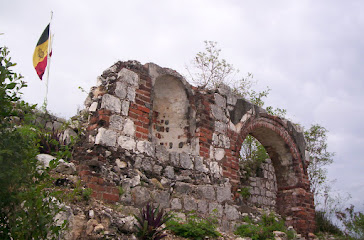
Pinnacle Gate Ruins
when the community flourished without police harassment. But Howell was a problem for the state- philosophically, socially, and, because he had become a leading ganja cultivator, economically. His calls for Black people to stop hailing the King of Great Britain and turn to The Emperor of Ethiopia led to his arrest for sedition earlier in the 1930s. His ganja production was the pretext for the 1954 raid on Pinnacle, where over 100 colonial police officers and detectives seized £3000 in cash and burned three tons of ganja stash. The authorities destroyed much of the Pinnacle, and after the last raid in 1958, no residents lived in the community.


Back o' Wall/Dungle and Coronation Market


Back o' Wall/Dungle was a sufferers' community in downtown Kingston-where Tivoli Gardens now stands, and it comprised roughly 5,000 people, an overwhelming amount of them Rastafarian. In 1958, Prince Emmanuel Charles Edwards kept the first-ever national "Groundation". This Nyahbinghi grounding took place in Back o' Wall and lasted for 21 days. After the convention, Rastas marched over to Coronation Market and planted their flag. The police promptly beat them, trimmed their dreadlocks, and locked them up. Later in May, police arrested Prince Emmanuel and burned down his Rastafarian camp.

Dungle
Back o Wall
From The Jamaican Daily Gleaner
Many describe this inaugural national Groundation as a decisive point in the antagonism between the Rastafarian movement, and the government and the public. The public, the police and security forces, and the media propagated the so-called anti-social elements of Rastafari. Society held disdain for the Rasta people. Later that year, more skirmishes: Police raided a Rastafarian camp in Westmoreland; in Linstead, a group of Rasta attacked two police officers, who shot and killed one of the dreadlocks. The police rounded up and arrested four more Rastas, who no one saw or heard from again.

In 1959, a Rastafarian security guard (or "gatekeeper") at Coronation Market (which stood next to Back o' Wall) had a dispute with a police officer on duty. The police beat this Rasta severely, which enraged the witnessing vendors at the market. Rasta, vendors, and sympathizers set state vehicles ablaze (allegedly). Police reinforcements rushed to the scene, clashed with the uprising, and moved their brutality over to nearby Back o' Wall where they unleashed retribution on the Rastas and other poor people living there. They kicked down doors; destroyed homes; arrested 57 Rastafarians, beat them, and further humiliated them by forcibly trimming their dreadlocks.

The Coral Gardens Incident 


Rudolph Franklyn had moved up from Moore Town, embraced the Rastafarian movement, and had grown a following amongst younger Rastas in the Coral Gardens/Montego Bay area. Franklyn did some small-scale farming on land in the Tryall Farm (land reportedly owned by the Kerr-Jarrett family) of Salt Spring. Landowners and local government officials planned to develop much of the local areas around Montego Bay for tourism. The police harassed the Rastafarians in the area continuously; they'd do all they could to run the Rastas off. Once they raided Franklyn's farm and reaped all the ganja they wanted, they chopped down the rest. Another time, they did the same. But Rudolph Franklyn was defiant; he insisted he was not squatting on anyone's land.* The police told him he was operating too close to Rose Hall.

At some point, the Kerr-Jarrett family sold their land to a man named Ken Douglas. In around October 1961, the new landowner sent the police to evict Franklyn, but this time, violence rang out. When the police rolled up to his farm, Franklyn was working with a cutlass or machete in hand. The police demanded he drop it. Franklyn refused. The police shot him five times in the stomach. (Some reports state they hit him with three shots; some report six shots. The police clearly shot him multiple times.)

The police left him for dead where he'd fallen and school children later discovered him. People rushed him to the hospital, and Franklyn received surgery. But a doctor informed him he wouldn't have a long life. 

"The headman of the property, Edward Fowler...brought a policeman to evict the brother (Franklyn) off the land. The unarmed brother was shot six times by the police, and believed to be dead, and was not taken to hospital until hours after. The brother recovered after months of medical treatment, although he was told by the doctor that he would live for only a short period. He was immediately sentenced to six months imprisonment on a charge of having ganja." - Journalist John Maxwell, in his article in Public Opinion, April 27, 1963
 
Franklyn was angry. He felt he was wrongly persecuted, shot maliciously and without cause and chronically injured. And though he was innocent in many people's view, he was tried, convicted and sentenced. According to people who knew him, when he was released in early 1963, Franklyn was a bitter man. And when police harassed him further, that did it. Franklyn desired revenge.


Before 5am on 'Holy Thursday', April 11, 1963, Franklyn and a group of Rasta bredren set fire to the Shell gas station owned by Ken Douglas. By midday that day, eight people were killed, including Franklyn, two of his bredren, two officers and three civilians (one being the headman of the Rose Hall property, Edward Fowler). Another three of Franklyn's crew had escaped, but were later captured and eventually hanged. 

"Bring in all Rastas, dead of alive!" - Prime Minister Bustamante, further telling police and soldiers that what the jails couldn't hold, the morgue would.


Police and soldiers rampaged over the next few days. They rounded up over 150 Rastafarians in four Jamaican parishes. Since the leader of the incident had already been killed, and his five accomplices killed or accounted for, most of the Rastafarians rounded up in the aftermath had nothing to do with the incident. Still, they were beaten and tortured, hair and beards trimmed; some were shot, and some killed. Civilians formed vigilante groups that also hunted and brutalized the Rastafarian bredren, stoning, beating them, and cutting them with glass bottles.


* In the film Bad Friday, Rudolph Franklyn's daughter stated that Franklyn had farmed on land that his father had left him. 

Sources:


Campbell, Horace. Rasta and Resistance: From Marcus Garvey to Walter Rodney


Maxwell, John and Desta Planno, Mortimo Togo. "Rastafari and the Coral Gardens Incident". The Jamaica Reader: History, Culture, Politics, edited by Diana Paton and Matthew J. Smith, New York, USA: Duke University Press, 2021, pp. 302-306. https://doi.org/10.1515/9781478013099-079


Tuesday, February 26, 2019

Abeng Op-Ed: African Governments Should Honor Black History Month by Jah Rootsman

copyright 2019 Jah Rootsman

What an anomaly that governments in Africa have little or no appetite in honoring nor celebrating Black History Month, which is celebrated in February to honor the black men and women who inspired us, liberated us mentally, spiritually and physically from the yoke of colonial oppression. South Africa has a lot to be thankful for, to stalwarts like Steve Biko, Nelson Mandela, Robert Sobukwe, Albertina Sisulu, Mahatma Gandhi, Desmond Tutu, Fatima Meer, Oliver Tambo, Winnie Madikizela-Mandela and countless others who sacrificed themselves for our freedom and independence in a thankless world.  They left legacies that need to be remembered and fulfilled and unfortunately it is up to conscious cultural groups like us, Rastafari, Kwanzaa and similar entities that are prepared to accept the responsibility and run with it. Regrettably, this reflects the puny minds of African political ‘so-called’ leaders, whose only interests are in self- aggrandizement, political propaganda and selfish agrarians. Their predominant agenda comprises a prevailing addiction to greed and self-enrichment. 

In Africa, #BlackHistoryMonth is supposed to generate a host and hive of cultural activities throughout the continent for the month to inspire communities and kids by edutaining them through music and other cultural and historical perspectives. Inculcating pride, confidence, honor and dignity in themselves as peoples of this great and majestic continent, ravaged and converted by colonials whose legacies have become the norm by which we Africans have shaped, defend and live out our lives today; lives which we call normal. The Bible is the most damaging contribution left by these nefarious colonialists and has usurped our own cultures.

"Africans are in bondage today because they approach spirituality through religion provided by foreign invaders and conquerors." ~ Emperor Haile Selassie I.


Sadly, in Africa, our children still do not have the slightest clue about the importance of #BlackHistoryMonth.  As Africans, it is embarrassing and disconcerting to watch the Diaspora keep the flame burning while we in Africa nonchalantly “carry on” with our lives, whereas our proud African legacies are being disregarded by the same people who see and call themselves ‘freedom fighters’ and ‘struggle heroes’. Jamaica has even elevated this month (February), to “Reggae Month”. As Rastafari in particular, we thank you, our counterparts, for this extended auspicious honor.


RISE UP AFRICA–RISE UP!

Rastaman. South Africa


Sunday, July 23, 2017

Rastafari Earthday


And of Zion it shall be said that this man was born there...

Blessed Earthstrong, Jah Rastafari


His Imperial Majesty
Haile Selassie I
Negusi Negast

Saturday, July 23, 2016

Blessed Earthday, Rastafari

There is no night in Zion, there is no night there
HalleluJah there is no night there
Rastafari is my light
I&I need no candle light
HalleluJah there is no night there.

"Let Jah arise and let his enemies be scattered: let them that hate him flee before him. As smoke is driven away, so drive them away: as wax melteth before the fire, so let the wicked perish at the presence of Jah. But let the righteous be glad; let them rejoice before Jah: yea, let them exceedingly rejoice. Sing unto Jah, sing praises to his name: extol him that rideth upon the heavens by his name Jah (Rastafari) and rejoice before him."

Thursday, May 5, 2016

Snapchat, Don't Take Rastafari For Joke Business

                                                   by Kaya Omodele @TheAbeng Snapchat released a Bob Marley filter on/4/20 (April 20)  and people began striking out against it almost immediately. Now, some people mightn't understand the whole controversy, so here it is in a nutshell. You (Snapchat) letting users make their selfie images look like Bob Marley, complete with dreadlocks, skin tone and tam, is like you're taking the culture and turning it into one, big poppy show. NOT a good look! "...Bob Marley's music has done more to popularize the real issues of the African liberation movement than several decades of backbreaking work of Pan-Africanists and international revolutionaries." ~ Eusi Kwayana in Rasta And Resistance. You see, Bob Marley is our messenger, like a prophet, a social and cultural conscience. And, Rastafari is not a play-play thing, even though it might seem like dreadlocks is just a hairstyle nowadays. But know this: natty dreadlocks are sacred to Rastafari; they are an expression, a symbol, of a Rastaman's (or Rastawoman's) covenant to Jah Almighty. Dreadlocks are as important a symbol to Rastafari as a cross is to a Christian, as a beard is to an Orthodox Jew or a Muslim. Snapchat, you wouldn't provide a filter featuring that pointed, papal hat, would you? Or, a kufi, a hijab? Or Cheyenne chief Two Moon's headdress? (But maybe you see nothing wrong with "redskin" images either) The point is, Rastafari elders were persecuted back in the day- locked up, dreadlocks forcibly shorn. At  Coral Gardens in Jamaica some were killed. In Dominica, the John government gave the green light to shoot to kill any dreadlocks found trespassing on private property. So, please, don't bother with all these faux-dread tams, the dreadlock filters, and all the other Sambo-like caricaturizing of Rasta. Don't take Rasta for no joke business!

Monday, October 3, 2011

Conscious Itation (Meditation)


For I, Kaya, meditation is the path I take when I engage in communion with the Divinity within me- 
i & I.
As a youth my Mother introduced me to meditation as a way of calming me because I use to have an acute case of asthma and a wicked case of vexation of the spirit and those two, when mixed, can drive a single mother clear up over a mad house wall. So she traipse me over to this Hindu man who showed two ah we lessons in dhyāna. I have been meditating ever since then, on and off.


People have been meditating in various forms for thousands of years. Many cultures have their own forms of meditation, while others overlap, sharing similar elements and traits. But regardless of minute differences, most people and cultures meditate as a part of attaining higher spirituality, or as Rasta seh, a Iyah Ites (higher heights).

There are certain common features  in all meditation, regardless of culture: a quiet/peaceful setting, concentration/focus/attention, a comfortable position, relaxed breathing.

There are also various ways people meditate. Some are:
  • using imagery or visualization of mentally relaxing places; 
  • silently repeating a spiritually/mentally calming word, phrase or thought (mantra) to help keep out distractions; 
  • using an increased sense of awareness to concentrate/experience the present through broadened senses such as smells, sounds; 
  • transcendental, which is using mantra to eliminate all thoughts from the mind.
  • and yoga, which involves performing postures and controlling breathing exercises to achieve healthier body and a calmer mind.

Meditation helps alleviate many stress-related illnesses like asthma, high blood pressure, heart disease, migraines and fatigue.
When I meditate, I remain still and embrace the stillness of mind. Most times I chant a mantra, but sometimes when in nature, I immerse myself in the sounds, smells, and feel of my surroundings.
I love meditating by the sea, fountains, streams and rivers because the sound of water dancing over rocks calms my soul. And if birds flock by, they bring chirps and flapping, flittering feathers to the orchestra.
When I have no phones ringing, computers blinking, cars beeping, and nothing demanding my attention, I can feel myself drifting within my mind. I often find that my thoughts continue rolling involuntarily, and so I refocus on my mantra, sounds and sensations around and/or within me. When I get to that space within where there is very little thought outside of natural phenomenon- my heartbeat, the breeze,etc., my mind is peaceful and relaxed. I've decreased my negative thoughts and energy while increasing self-awareness and positivity.
I read somewhere once that when we calm ourselves in meditation, our neurotransmitters rest from sending on thoughts/electric charges to our minds. Its like a deep form of rest.
Itation rejuvenates mind, body and soul.
Namaste...RastafarI


Monday, September 26, 2011

Still I Rise: Giving Thanks


Haile Gebrselassie during FBK-Games 2009Blessed Love. Today I begin my New Year and so I man rise giving thanks to the Almighty for granting one more earthly revolution around the sun. In striving for Balance, I realize that this Journey called Life is not a hundred- meter dash but much like a marathon in which endurance is paramount- so I approach the race less like Usain Bolt and more like Haile Gebrselassie - with great stride and diligent pace.

One lesson I've learned is how to cherish moments, even as time rushes by like a tormented stream. I make concentrated efforts to breathe-in, internalize experiences and feel the moments. I am grateful for everyone who shares, or has shared, my journey in some point along the way.

I Arise every time I stumble. I rise, brush off, reveling in this journey, knowing both great joys and pains, embracing the warming sun and facing pelting rains. Mek each experience stimulate growth and development because stagnation is death.

Jah Bless each and every one, collectively.
There are over six billion people on Jah Earth...There is only ONE LOVE!

Build more bridges; less walls and fences. This is my New Year.

"When the truth awakens in you, you can't do anything but accept the truth." ~ Bob Marley


Sunday, September 11, 2011

Melkam Addis Amet (Happy New Year): Enkutatash or Ras Awde Amet

Melkam Addis Amet (Happy New Year)


Today, September 11 is 
Mäskäräm 1, the first day in the first month of a new year in Ethiopia. In Amharic, the official language of Ethiopia, the word for New Year is Enkutatash* while in Ge'ez** the term is Ri'se Awde Amet.***


Queen Makeda

Enkutatash is traditionally an important day to Ethiopians. When Makeda returned from her visit to King Solomon, her chiefs gave her enku, jewels. Enkutatash has since been celebrated in the spring, which follows a three-month rain season. It is a time to celebrate new life, rebirth, a beginning, new hopes and dreams.
***Ras Awde Amet literally Head Anniversary. This term is preferred by the EOC/Ethiopian Coptic

Ethiopia and Egypt

The date traditionally is important in the ancient African Valley as it marks the the highest point of annual inundation of the River Nile and is recognized by Coptic traditions of the region as the end of Noah's flood. The Blue Nile flows from Lake Tana in the Highlands of Ethiopia while the White Nile flows through Sudan. They converge into one great river and its inundations represent annual resurrection and rebirth. Realize that an intimate connection between Egypt and Ethiopia has existed from ancient times. Recall that even from the Twenty-first Dynasty the two countries were sometimes under the same ruler and so, naturally, culture, arts, religion and philosophy were effectively interwoven.

In Egypt, the first month of the Season of 'Akhet'(Inundation) is called Thout. Today September 11 is Thout 1 on the Coptic calendar. The Ethiopian Calendar and The Egyptian Coptic Calendar are closely related and the names of months being the major difference. Both are derived from the ancient Egyptian Calendar

*Enkutatash እንቁጣጣሽ is literally "gift of jewels"

**Ge'ez is an ancient Ethiopian language from which Ahmaric is derived. Ge'ez is the official language of the Ethiopian Orthodox Church


Friday, September 9, 2011

Word, Sound, Power: TriUne (Tribute to Rastafari in Transition)


(Never Gone! Never Forgotten!)


Word, Sound, Power: TriUne (Tribute to the Rastafari in Transition )
copyright K. Omodele 2011 

 Man, Know Thyself
Physically, Mentally, Spiritually
Eye and Eye
i. i n I
Prophet, Priest, King
Word, Sound, Power
Kete, Fundeh, Bass
Second, Minute, Hour
Ites (Red), Gold, Green
Knowledge, Wise-mind, Overstanding
One! One! One!
  Aim,       God,     Destiny
Air, Water, Fire
(EARTH)
Breath, Chalice, Fire
(SACRAMENT)
Man, Wombman, Child
(FAMILY ESSENCE)
 Light, Love, Life
(LIVE)
Man, Know Thyself
Africa, Carry beyond (Caribbean), Americas
Prophet, Priest, King
Word, Sound, Power
Sun, Moon, World
Second, Minute, Hour 
Head, Body, Soul
 Justice, Livity, Truth
Father, Mother, Child
the Elders, The Movement , the Youth
the Abeng, the Shaker/shak shak, the Akete
Word, Sound, Power

Wake Up! LIVE-aspora
cyaan dis di Tri-Unity
Conceptualize...
Beyond...
the Box.


Tuesday, August 17, 2010

Marcus' House

(Photo By Jennifer Poyser 2009)

©2010 K. Omodele


Why does Marcus’ house lean
with dilapidated beams
and neglected, time-cracked posts?
Surrounded by rambling goats
hurry come latelys who don’t overstand
the glorious essence Mosiah’s stance
not religion rather Community
uplift… One Aim, One God, One Destiny.
How could we not carry the Trumpet’s Sound
Self reliance, pride: no national bound
until the whole of Africa is free
reciting the words “Self Identity”


Friday, December 18, 2009

Tempting Irie: II

©2007 K. Omodele (Tempting Irie)


Part II

Irie fluffs the sliced-up ganja. Fingering the ring on the ratchet, in a single, fluid motion, he flicks the blade shut and pockets it. Then he retrieves a challawa from the desk and packs the kutchie with herb. He begins chanting.
“Let Jah arise and let his enemies be scattered; let those that hate him flee before him; as smoke is driven away, so drive dem away; as wax melteth by the fire so let the wicked perish at the presence of Rastafari…Extol H.I.M who reigneth inna Zion by His name OH JAH Rastafari…”
Sukunya quakes like Port Royal just before it crumbled and tumbled into the Caribbean Sea.
He won’t so much as even poop on me, she thinks.

Seducing Ratta had played out much smoother than this. Ratta had yearned for her, longed for her gift. He had done discarded his conscience long, long time-way back when he was a younger youth hustling fi Blacka. Ratta woulda jukked down (stuck up/robbed) Israel and all Twelve Tribes to earn couple stripes. If Blacka ever said, “Mr. Big Mouth fi hold some FAT shot in his FAT rass!;” then, that was no problem.
Ratta was a fiend for notoriety.
So one night, almost a full year ago, Sukunya had offered herself to Ratta at Blacka’s Boxing Day Bashment. Blacka, with Ratta and the whole crew, marched in shining. As they flowed through the crowd like a fighter and his entourage at a prizefight, the crew sang out, “Blacka Knights.” People murmured and nodded and Sukunya pumped through Blacka’s veins, his heart, his brain. She consumed him and he wielded her triumphantly as he waved his eagle-head cane in the air like a scepter in time to The Bruck Out riddim.
As Ratta watched, he brindled with envy. Blacka was king.
Sukunya chuckled and approached Ratta. Few men had ever resisted and she doubted he would be anything special.
“Blacka cyaan (can’t) hold mi, yuh know,” she said matter-of-factly. “He cyaan control me.”
The music wound low and the crowd movement slowed like a trek to perdition. The club scene had fallen catatonic- which was a perfect canvass for Sukunya.
Ratta’s eyes brooded wickedness. He clenched his fists, raising them in front his face. “I want yuh so bad I’da rip out mi own mother heart out her chest. I want this-”he circled his hands around the room and shrugged “- I want all this fi me- RATTA.” He laughed, deep, from within a rotten soul.
“I know. Yuh feel me now, mi Boy? Blacka come like nuttn to you. Imagine, the world is yours.” She winked, and then added. “Drink up. Just accept mi. FEEL me. Taste me. ”
Sukunya giggled uncontrollably as the music and the crowd catapulted back to life.

A few early mornings later, before sunrise, Ratta and his side-kick Tully waylaid Blacka outside his home in Flatlands. Around 5:30 a big, bad, midnight Escalade barreled up the street like a powerful tidal wave. As his driver squeezed back and forth into a tight parking spot, the Boss lit a bighead spliff and took a deep pull.
Ratta and Tully crept silently, low in the valley of shadows between the building and parked cars. As they came up to the Escalade, Ratta raised up two forty-fives and -BLAM.BLAM.BLAM…bust them rapidly through the passenger window while Tullo unloaded six booming shots from a pump shotty around on the driver side. The Escalade’s engine vroomed hard and the SUV lunged forward, plunging into a Lincoln Town car.
The car alarm wailed.
Tullo ran around the SUV, and unloaded one more in the Boss’s head.
In all, twenty-seven shots blared.
The two assassins looked for any movement from the slumped over men.
Satisfied, they sprinted up the block.

Back in the apartment, the clock reads 11:45. Sukunya top lip quivers.
Irie is sealing up his chanting. “…Oh Great and Thunderable I- JAH RASTAFAR I.”
Sukunya shakes. When Irie thumbs a lighter and a single flame spurts up dancing in the dark, she cringes.
He lifts the fire to the kutchie and draws long and deep on the pipe. The flame climbs in, flooding over the herb, igniting it to sizzling orange embers. He holds his breath, letting his meditation ascend to higher heights.

Growing more restless, Sukunya pops up and sashays over to Irie. Leers over his shoulder, anxiously checking the clock.
11:47
She whispers:
“Yeah man, smoke up. I perform best on the unconscious. My ride go take you higher than that Indica, Irie Dread. Trust mi, you see.”
Finally he exhales, a smoke plume flaring from his nostrils.
Sukunya chokes on the congregation of smoke inundating her like judgment ‘pon the land.
“UGH-Ugh-UGGGHH.”
Irie doesn’t even stir. He holds firm.
Sukunya moans. “Taste me once, just once; you never get enough.”
She kisses his neck. OWW. Scalded, she cowers back.
What in di hell-?
Irie beams.
You need me Irie. Relax. Take me and men will tremble when they hear your name. Women will bow-She reaches for him again. But now awakened, he leans away.
No, Harlot. All is vanity
Relax; she repeats and brushes scorching fingertips down his chest. Claw-like fingernails soaked with the blood of martyrs leaves trails on his shirt.
Look at me! Her eyes are drunken, blood-red like her nails. Surely you want what I offer. Behold my fullness. Render your heart, nuh, I’ll bring you ecstasy. Discard your clothes of righteousness and I will give you the world.
Slowly and jerkily, she leans in and presses her lips to his.
Irie twitches and breaks away. The radiator steams, loud and vexed.
Sukunya is dripping wet.
Irie sticks out his chest. I AM-Jah blessed. He smiles and bounces to a song in his heart. Di hungry shall be fed/ Jah know di blind shall be led…
But Irie, you don’t know me yet. Yuh never wonder? I’ve lain with kings. Great men have drunk my wine. Here,
thrusting her golden cup at him.
No! He refuses, shaking his head. I DO know you.
She spins around, grabbing a glance at the clock.
11:56.
No. You don’t. You may have seen me around, with Ratta, Blacka…other dons. They’re like grains of sand beneath the Great Pyramids. But you, I want you more intimately. Like Napoleon. Like Julius Caesar.
Her eyes dart back to the clock. It clicks to 11:57. Her heart begins to trot. She continues:
Like Nimrod and Nebuchadnezzar, I’ll lift you high, high, high-like pharaohs. Make you great. People will call your name through the ages. Just kiss me; taste me; SEIZE ME. HURRY Irie!
She’s panting.
But Irie remains rooted, firm, like a tree. Smirking, I know your mystery.
Wha?
She snatches the time off the clock.
11:58.
She gasps. Begins pacing back and forth like a penned-up beast.
LISTEN, she snarls, drenched all over. Gulps down the last of her Brunell and flings away the cup. Paces some more. You want a Bentley? Fine silks? Linens? Islands in the sea? Souls of men?
Irie chuckles. Flashes his mane, remembering, "...leaves shall not wither."
She flails her hands in the air. Her pacing quickens to a frantic gallop around the room. She stops. Points a finger. Is about to say something, but presses her lips together. Shakes the finger at him.
What? Tell me wha yuh want!
11:59
Her lips are parched. She gallops around again, circling him. Fast. Faster.
Tell me. Hurry. Quick nuh Irie.
Irie remains still, grinning with the challawa (chalice pipe) in hand.
She brakes suddenly. She opens her arms. IRRIIEEeee!! Come to me nuh? Tell me wha yuh waaaant?
Irie delights. "FIRE! For Purification. Gimmie FIYAH!"
From downstairs, young voices cry out. “TEN, NINE, EIGHT-”
Sukunya falls to her knees and rips away her soaking garments. She kneels desolate and naked.
Irie stands over her and can hear the weeping and moaning and mourning of those who had slept with her. She looked up at him imploringly.
The voices outside sing:
“FIVE, FOUR-”
Sukunya bursts into flames.
“THREE, TWO, ONE.”
Great volleys of gunfire erupt outside around the whole Flatbush, on and on, a thundering salute to the new millennium.
Now Sukunya is a blazing inferno. She crumbles to ashes as Irie watches standing over her, bemused, burning his chalice pipe as gunshots pound outside like falling brimstone.
And now it is done.
Rastafari stands alone.


Enhanced by Zemanta

Wednesday, December 2, 2009

Short Story: Tempting Irie

Copyright 2007 K.Omodele (Tempting Irie)


Part I
(Introducing Irie and Sukunya)

Old year’s night and one millennium hurtles toward the next. The depths of a Flatbush studio apartment whisper blackness. In the front, scarce streetlight tumbles through a monolithic window and falls flat a couple feet beyond the sill. 11:37 PM glows neon blue against the darkness. Overworked, a radiator hisses in protest.

Sukunya fidgets on a wicker settee. She grins, but her eyes scurry about the room like a condemned woman, strapped in, dreading the marching time. She squints as she settles on a figure planted behind the desk by the window, which frames Prospect Park’s skeletal landscape.
Outside, down two floors of corroding fire escape, teens gaggle and shriek on the stoop. They stumble drunkenly in and out of the building’s vestibule.
Jay-Z crackles through a Phil Collins sample. “You belong to the city/You belong to the night…” A horn screams, brakes EEK and upstairs a mother shrills from a window. “ MEEKA. Haul yuh rass in this house. NOW!!!”
"prospect park, brooklyn 2005" by postopp1 
is marked with 
CC BY-ND 2.0.

These sounds limp through the half open window and nudge the stillness in the apartment. Sukunya spills more Brunello di Montalcino into her golden cup.
She sips.
She slurs:
“So Irie, you don’t never think bout me- why men always fighting over me?” She strums her swells- breasts, hips, curve of her butt. Prattling, she arches her back and cocks her legs limberly up on the settee. A purple, silken camisole clings to her bronze skin which glistens like melting ice.
But Irie doesn’t notice. On a stacked milk-crate throne, he hunches over an unpolished, raw-pine desk. Light from outside feebly captures the concentration carving his features. Whittled brows glower as he slices a half-dozen Indica buds with a ratchet so keen, it can divide light from the darkness. Each drag of the knife scars the Steel Pulse “Armageddon” album cover he uses as a cutting board. He pauses. Removes his leather buckas-styled tam and Congo-natty locks cascade heavily over his stone-cut shoulders. A worn reprint of Bob’s “Confrontation” shield’s his chest.
Sukunya splays her thighs, bracing an elbow on a knee.
“I know you feel me, Irie. Can’t ig me forever.” Snaking fingers twine the gold, precious stones and pearls coiling up her neck.
She slips a glimpse off the clock. 11:40.
A light sliver ignites her cat eyes for an emerald second. “I see you watching me when I’m with Blacka. And Lenky. Or, when I’m hugging up Worries over in New Lots.” Puckering scarlet lips, she puffs him an air kiss. “Yep! I know you want me, Irie Dread. Act like you don’t, but you need me.”

Irie fluffs the sliced up ganja. Fingering the ring on the ratchet, in a single, fluid motion he flicks the blade shut and pockets it. Then he retrieves a challawa from the desk and packs the kutchie with herb. He begins chanting...
(To Be Continued...)

READ TEMPTING IRIE PART II (The lit up finale)


Enhanced by Zemanta


Related Posts Plugin for WordPress, Blogger...

Featured Post

Spoken Word Griots: African Oral Tradition in Caribbean Music (Third Part) - Calypso

Spoken Word Griots: African Oral Tradition in Caribbean Music (Third Part) - #Calypso by K. Omodele African traditions and customs are i...

Popular Posts