Related Posts Plugin for WordPress, Blogger...
Get Our Free Newsletter
Showing posts with label Africa. Show all posts

Tuesday, February 26, 2019

Abeng Op-Ed: African Governments Should Honor Black History Month by Jah Rootsman

copyright 2019 Jah Rootsman

What an anomaly that governments in Africa have little or no appetite in honoring nor celebrating Black History Month, which is celebrated in February to honor the black men and women who inspired us, liberated us mentally, spiritually and physically from the yoke of colonial oppression. South Africa has a lot to be thankful for, to stalwarts like Steve Biko, Nelson Mandela, Robert Sobukwe, Albertina Sisulu, Mahatma Gandhi, Desmond Tutu, Fatima Meer, Oliver Tambo, Winnie Madikizela-Mandela and countless others who sacrificed themselves for our freedom and independence in a thankless world.  They left legacies that need to be remembered and fulfilled and unfortunately it is up to conscious cultural groups like us, Rastafari, Kwanzaa and similar entities that are prepared to accept the responsibility and run with it. Regrettably, this reflects the puny minds of African political ‘so-called’ leaders, whose only interests are in self- aggrandizement, political propaganda and selfish agrarians. Their predominant agenda comprises a prevailing addiction to greed and self-enrichment. 

In Africa, #BlackHistoryMonth is supposed to generate a host and hive of cultural activities throughout the continent for the month to inspire communities and kids by edutaining them through music and other cultural and historical perspectives. Inculcating pride, confidence, honor and dignity in themselves as peoples of this great and majestic continent, ravaged and converted by colonials whose legacies have become the norm by which we Africans have shaped, defend and live out our lives today; lives which we call normal. The Bible is the most damaging contribution left by these nefarious colonialists and has usurped our own cultures.

"Africans are in bondage today because they approach spirituality through religion provided by foreign invaders and conquerors." ~ Emperor Haile Selassie I.


Sadly, in Africa, our children still do not have the slightest clue about the importance of #BlackHistoryMonth.  As Africans, it is embarrassing and disconcerting to watch the Diaspora keep the flame burning while we in Africa nonchalantly “carry on” with our lives, whereas our proud African legacies are being disregarded by the same people who see and call themselves ‘freedom fighters’ and ‘struggle heroes’. Jamaica has even elevated this month (February), to “Reggae Month”. As Rastafari in particular, we thank you, our counterparts, for this extended auspicious honor.


RISE UP AFRICA–RISE UP!

Rastaman. South Africa


Monday, February 4, 2019

Africa Was Born in Me: Black History 24/7, 365

Black History 24/7, 365 @TheAbeng #theabeng


Black history is world history. African history is part of the Black story; after all, Black history didn’t begin with slavery, neither did it end in Africa. Black history reaches from the Rift Valley floor to the various ages of mass-incarceration cages, to repatriation and reclamation of African citizenship. Black people stories rather leap off ships, jump off cliffs, tear their own skin with sparks from munitions than live bowed on knees. Black history (ourstory) is love while gritting teeth, while kissing teeth, while sucking teeth, while grinding teeth down to chalk so as not to have families torn apart. Black history is Black people story.

We now reclaim Black history as Black people’s story–we will tell our own stories, express our own experiences; we will no longer sit down by another fire side and hear someone else tell us who we are, what we should be, who we should dress like, how we should talk. I want talk how-so-ever I feel fah talk to me Nua. And if it pidgin, or creole, or patois–soundin’, is because one time we couldn’t talk unless we talked like how the colonialists talked–speaky, spokey. So, Black history is Kreyol, Black story is Creolese, Black story is Patwa, Black story is Ebonics or Pidgin or Papiamento or Krio. AND, Black history is also Twi, and Yoruba, and Mandinke, and Xhosa, and Ibo, and Hausa, and so many others because African tongues is the root of we ‘tory, our story.


African history is black history because Africa is born within us, and walks with us; right, Nana- Buluku and Olorun? Right, Shango? See me, Nyame? Listen me, Nyambi, nuh man? Africa born in all we Samba, all we Rhumba, all a we Nyabinghi, we Kumfa, we Kumina; in all we Merengueing and we Limboing and we Wining, and we Kumbaying, mi Lord. You overstand? Africa born in all we cassava and yam and ochro gumbo and metemgee/oil down/run down and even when we pop a top a pour a lil libation pon de ground for we bredren wah gone; Africa in deh, it in deh, ayahhh- ohhhh, it in deh.  


“I am not African because I was born in Africa but because Africa was born in me.” ~ Kwame Nkrumah


Washington, D.C.
Cartegena


Georgetown


Wednesday, January 30, 2019

Abeng Essay: The Beginnings and Development of Racism in The U.S.: Some Implications for Black Americans (Part 2) by Dr. Cicely A. Rodway


The Beginnings and Development of Racism in The U.S.: Some Implications for Black Americans (Part 2) by Dr. Cicely A. Rodway copyright 1987 C. A. Rodway


"To fully appreciate the long history of white racist views which have had such negative effects on all aspects of Black Americans' existence, it is necessary to begin at the very beginning when the first [Africans] were brought to America from the Motherland, Africa." ~ Dr. C. A. Rodway; from part 1 of this essay 


The first Africans were brought to America in 1619 by a Dutch captain and left in Jamestown, Virginia. At this point in history, Blacks were viewed as simply another aspect of the many-sided economic problems which the white colonists were called on to face. (Jordan, 1968) The colonists gave very little attention to the status of the slaves who were treated similarly to white indentured servants and enjoyed the same status. Therefore, up to 1651, at the end of their service, black indentured servants were "assigned lands in much the same way as was being done for white servants." (Jordan, 1968)


This situation soon changed as the colonists, faced with an unlimited supply of land, needed labor to utilize it. The colonists grew tired of replacing indentured servants whose period of service had expired. They were also faced with the failure of their attempts to use Indian slave labor. The colonists quickly saw a way by which they could solve all their problems at "one fell swoop."

The problem could be solved by placing the negro in "perpetual servitude," which would solve the problem of finding replacements, as there would be an "inexhaustible supply" of Negroes. (Jordan, 1968) This purely economic decision marked the advent of the slave trade in America. It began gradually, but begin it did for by 1640, when Negroes were brought into the country they were no longer given "indentures or contracts and could not look forward to freedom after a specified period of service." (Jordan, 1968) But, it was not until 1661 that there was a statutory recognition of slavery. However, despite the new slave laws, no attempt was made by the colonists to enslave or change the status of the indentured servants who had completed their period of service and were free to live as the chose in Virginia.

This chain of events in Virginia was more or less mirrored in the occurrences in the other Southern colonies, in New York, New Jersey, Pennsylvania and Delaware. By the end of the 1660's, negro slavery was a "fait accompli" in the settled parts of America. There were degrees of harshness in the treatment of slaves and in the attitudes of the colonists toward slavery, as was evidenced by the actions of William Penn in Pennsylvania and the Quakers in New Jersey. Despite this, the final and incontestable fact was that negro slavery had been institutionalized and legalized and was an accepted status for negroes. This was to continue as an accepted part of the fabric of American life until 1865.

How Did Christians Rationalize and Justify Slavery?

It may seem ironic that this new "Christian" country whose stated
basis for establishment was individual freedom and whose enunciated doctrine was built on the "essential equality of all men," (Franklin, 1847) could be involved in the slave trade. The Bible had spoken unequivocally against the evils of slavery and had condemned slave owners. In Exodus 21:16 it was stated, "And he that stealeth a man and selleth him, or if he be found in his hand, shall surely be put to death." So, the colonists in an attempt to appease their consciences set about finding rationalizations for enslaving negroes.

Sunday, January 20, 2019

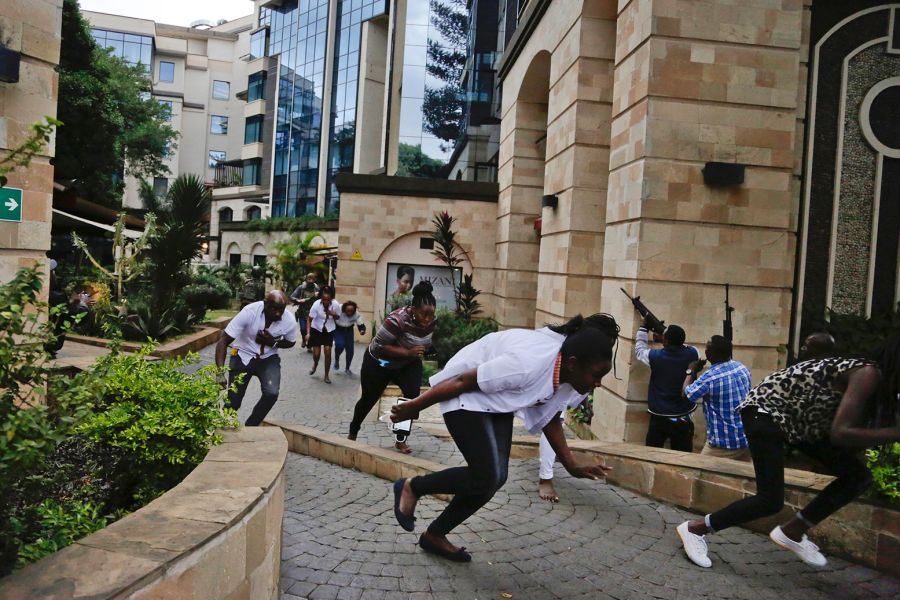
Five Things About Kenya That Terrorism Will Not Shadow

Let's Talk Nairobi, Kenya
by Kaya Omodele @TheAbeng 


From: https://www.stripes.com/news/africa/al-shabab-says...
With these latest terrorist attacks in Nairobi, Kenya this past Tuesday (January 15, 2019), there have been many negative images (however realistic and necessary they may be) released for the world to see. In this information age where "shock and awe" is more mantra than mere phrase, sensationalism is the holy grail. 


For me though, there are far too many negative narratives of Africa and the African Diaspora. I understand that there is war and crime and violence all over the world and I reason about these realities here on The Abeng and My Conscious Pen regularly. But if all we discuss are negatives, then the narrative of the Black World, our diaspora, will be taken in as all grim and gloom. 

But Africa and the African Diaspora are on the move, forward and upward, ever. And in this spirit, I am listing some of the most positive happenings in Nairobi, Kenya.


Five Things To Love About Kenya


1. Growing Economy. Kenya boasts the second largest economy in East Africa. (In 2015, Ethiopia, with a much larger population, overtook Kenya as the largest economy in the region). With a GDP growth rate for the past 5 years at around 5%, Kenya's economic growth is solid and above the United States'. And the projection for 2019: 5.8%.


2.  Large, Vibrant Cities. Nairobi is a thriving, dynamic, metropolitan city, where over four million citizens hustle and bustle, repping more than 40 ethnicities. Hundred of  multinational companies and NGOs have their East African/Central African regional headquarters located in Nairobi; on top of all that, it's also a tech and creative hotspot.


3. Creative Kenya. One of the most intriguing qualities about Kenya for me as a writer is the fertile environment for creative storytelling. Young storytellers, whether authors or filmmakers, are encouraged to tell compelling stories, though sometimes faced with a government fight against unsavory content.


In April 2018, The Kenya Film Commission (KFC) promoted "My Kenya, My Story", a mobile competition in which they called on young, independent filmmakers to submit their smartphone, film projects. And the annual Slum Film Festival calls on filmmakers from slums and ghettos in Nairobi to submit their films showcasing stories. 


Some of Nairobi's stories and storytellers:


4. People of African Descent are Repatriating to Kenya Blacks in the African diaspora are moving to Kenya, Nairobi and Mombasa in particular, where we are finding business opportunities in an economic environment that's fertile for entrepreneurs with innovative and sometimes even simple hustles and ideas. For those of us thinking of African repatriation and business, keep in mind that value in any market can be found when a need in that market is identified, qualified and quantified. 
When thinking of making Kenya (or any African country) home, or a business location, due diligence is paramount of course.


From Compton, California, Preshley Knight moved from the United States to Kenya after she became extremely ill. She began hustling cakes on the streets in Nyeri, parlayed that into working for a bakery and now has since started up her own company, Wakanda Express Tours and Africa Immigration Consultants.


5. Kenya's Music Scene


While the attack on Nairobi was indeed horrific, that level of violence is not the norm for this thriving, young city. It's a shame that much of the media mainly report news in a way that commands clicks. While some of Africa is indeed at war within itself, most of Africa is on the rise or booming. As black writers, let's be responsible, balanced, logical, compassionate; let's place news about the Motherland in perspective.  

Sources:
 https://www.aljazeera.com/news/2019/01/kenya-al-shabab-target-190117054949463.html

https://www.theeastafrican.co.ke/oped/comment/Kenya-creatives-industry-movies-support/434750-4382088-5y5f81z/index.html

https://www.kenyanvibe.com/the-kenya-film-commission-calls-for-entries-from-young-filmmakers/

https://www.npr.org/sections/goatsandsoda/2015/09/03/436617865/he-had-one-week-to-make-a-movie-for-the-slum-film-festival

https://www.vogue.com/article/the-kenyan-cool-girls-guide-to-nairobi

https://www.kenyanvibe.com/top-10-hip-hop-artists/


Sunday, December 30, 2018

Abeng Essay: The Beginnings and Development of Racism in The U.S.: Some Implications for Black Americans (Part 1) by Dr. Cicely A. Rodway

The Beginnings and Development of Racism in The U.S.: Some Implications for Black Americans (part 1)
by Dr. Cicely A. Rodway
copyright 1987 C. A. Rodway


"I am not, nor ever have been, in favor of bringing about in any way the social and political equality of the white and black races; I am not, nor ever have been, in favor of making voters or jurors of Negroes nor qualifying them to hold office... I will say in addition to this that there is a physical difference between the white and black races which I believe will ever forbid the two races living together on terms of social and political equality. And in as much as the cannot so live, while they do remain togerher, there must be the position of superior and inferior, and I as much as any other man am in favor of having the superior position assigned to the white race."  
~ Abraham Lincoln 1895

Lincoln, in this statement, presented a viewpoint which was not atypical in his time nor in the times before and after his presidency. It is a viewpoint which is based on the belief that black peoples are inferior to whites. It is a viewpoint which has led to individual and governmental acts and policies which have attempted to dehumanize Black people in the United States and to circumscribe their individual and group efforts.Finally, it is a viewpoint which has had devastating psychological repercussions on blacks as well as whites.

These views are steeped in prejudice, which prejudice as defined by James Jones, "is a negative attitude toward a person or group based upon a social comparison process in which the individual's own group is taken as a positive point of reference." (p. 3) He goes on to point out that the "behavioral manifestation of prejudice is discrimination - those actions used to maintain own-group characteristics and favored position at the expense of the comparison group," (p. 3)

Implicit in a position such as Lincoln's is the need to ensure that the roles of black and white people are clearly defined and positions of inferiority and superiority maintained. In order to ensure that whites maintain the superior position it often becomes necessary to set up structures within the society and to implement policies with this in mind. Carmichael and Hamilton have defined such policies as racism which they define as "the predication of decisions and policies on considerations of race for the purpose of subordinating a racial group and maintaining control over that group." (p. 1)

Individual Racism and Institutional Racism

Carmichael and Hamilton in continuing their discussion of racism in the United States, make a clear distinction between what they refer to as "individual racism" and "institutional racism". Individual racism is described as being overt and is therefore easily recognizable as it manifests itself by causing "death, injury or the violent destruction of property." The second type of racism, institutional racism, is much more insidious as it is less identifiable for it "originates in the operation of established and respected forces in the society." They give us examples of institutional racism, situations in which,
...five hundred black babies die each year because of lack of proper food, shelter and medical facilities, and thousands more are destroyed and maimed physically, emotionally and intellectually because of conditions of poverty and discrimination in the black community... or when black people are locked in dilapidated slum tenements, subject to the daily prey of exploitative slumlords, merchants and loan sharks and discriminatory real estate agents. (p. 4)

Wednesday, November 7, 2018

The Abeng Collection: Practicing Garveyism

The Abeng Collection by House of Dalle: Application of Garveyism 

"Be Black, buy Black, think Black, and all else will take care of itself." ~ Marcus Mosiah Garvey
Holding fast to Garvey's vision by bringing members of the African diaspora into a creative collective and economic cooperation, The Abeng has partnered with Benny Dalle to bring forward The Abeng Collection by House of Dalle. Our new collaboration injects Afrocentric styles and ideas into fashion but also reflects principles that Garvey and so many other leaders propagated, self-sufficiency through building black businesses and trade. 
"For many years white propagandists have been printing tons of literature to impress scattered Ethiopia, especially that portion within their civilization, with the idea that Africa is a despised place, inhabited by savages, and cannibals, where no civilized human being should go, especially black civilized human beings. This propaganda is promulgated for the cause that is being realized today. That cause is colonial expansion for the white nations of the world." ~ Marcus Mosiah Garvey

House of Dalle Bernadette "Benny" Dalle is a creative, hard-working young woman living in Lagos, Nigeria who began designing and sewing her own clothes because, she longed to wear the latest fashions she saw in magazines, on TV and online. Her attention to detail is amazing and if you know Benny, you know she works her finger to the bone. Benny is the sole owner of House of Dalle, which creates custom clothing and keeps three people (two who are tailors) in Lagos employed.


The Abeng Collection


I, Kaya, don't know a thing about sewing or tailoring; I just love wearing what I like wearing. But I've dreamed about starting a business that would bring people of the African diaspora together and serve as a vessel for economic empowerment. I really wanted to create a venture where people of the African diaspora could control the supply chain, from manufacturing straight down to the user. 

The Abeng Collection is custom, fitted clothing and we just received our first shipment all the way from Lagos. I look forward to growing our partnership and business and am extremely proud to collaborate with Benny. Today, we're a humble hustle but with nuff  brain pumping and eye-brow furrowing, we goh definitely wave Garvey flag and turn this into a proud, black-owned business. 


"We must give up the silly idea of folding our hands and waiting on God to do everything for us. If God had intended for that, then he would not have given us a mind. Whatever you want in life, you must make up your mind to do it for yourself." ~ Marcus Garvey   

Marcus Garvey quotes about reading.


The Abeng Collection


Wednesday, September 26, 2018

Blessed Earthday, Winnie Mandela

Bless Up, Winnie Madikezela Mandela... Blessed Earthday.
 Amandla! You meant so much to so many all across the African Diaspora and around the world.

We love you, Mama. Never Gone! Never Forgotten!


Sunday, February 18, 2018

Mutabaruka Speaks on Black History on Cutting Edge 1-31-2018

I was listening to Mutabaruka's Cutting Edge radio show on January the 31st, previewing Black History Month which would begin the next day. The Bredren reasoned in depth about the brainwashing that plagues African people and how we get caught in European interpretations and philosophy. Basically, how as black people we just accept European culture, embrace it and defend it as we own. I think its because many of us are lost, especially when it comes to history and culture. Many of us accept European culture, religion and mannerisms without even understanding how these things developed and how they became ingrained in our day to day lives as black people. 

Mutabaruka said:
"Issa mad thing. Is mad we get mad. All a we get caught in it; all a we, there's no exception to the
rule.... Valentine's day a come, most people get caught inna that. Easter a come, it bigger get caught inna because that is the most auspicious 

Mutabaruka
time of the Christian calendar. That nuh have nothing to do with Africa; that nuh have nothing to do with blackness. All when you hear a man talk bout him a read Bible and a try switch the characters in it to black, him thinking is white. Is not the color of the characters, is the mindset that drives the characters in the Bible. So you could a paint Moses black little more, and Jesus Christ black little more, it don't make no difference if what is there yet still wallow inna the same thinking that in the first place tell you they white. We need fi search fi a new understanding, 'cause Planno did say a new faculty of interpretation. Even Rasta get caught inna it. We get caught inna it to the point where now that we all Jews, heh-heh, and we love say it too, and 'we are Christian soldiers, onward Christian soldiers marching on.' Our reference is always in the context of European understanding. So we define and we use logic that is determined and decided by western thinkers, western philosophers, and we don't know how to decipher what is ours and what is not ours..."


Now I can guess that many readers are thinking, So what? Jamaica (or any other Caribbean country) is a Christian society. 
Yeah, but how did it get so? And, if we know that it was forced upon our forefathers, then why black people so quick and ready to defend it? And worse, if you tell some of we that Shango is we thing, is our culture, some of us going to get vex and tell you that you working obeah. 
Now, get this straight: I am not a follower or practitioner of any form of obeah or voodoo. But those things are our own African thing and I acknowledge them as such. I even embrace the knowledge, knowing full well that just because Europe says that these things are inequity and idolatry, doesn't make them less important or less-than anything for that matter. Black history and culture is our story, its rich and we need to learn to embrace our African selves.

Mutabaruka stated:
"African sensibility don't prevail inna the Jamaican society. We celebrate almost 360-odd days of white history and tomorrow is the first day of February, which is Black History Month. But most people will not, and I'll repeat, most people will not even think of commemorating Black History Month. As one, young politician say, 'Black History Month is irrelevant to Jamaica. It was started in America because of the need, and because of how white people was treating black people in America so that was the necessary in America but here it don't necessary.'
But it more necessary yahso. Because the slave master left all of him thinking here and it embedded and pinned down inna we. That all when him no deh yah (when he's not here) we are living out the slave masters ideas and philosophies. And we even implement it and institutionalize it inna we politics, inna we religion, inna we social order..."

Another point I thoroughly agree with. We uphold Christmas, which is a lie, and turn our noses at Kwanzaa? And give all kind of reasons why we won't support it; bout how that is an American thing.
But Ethiopian Orthodox (one of the oldest Christian churches) doesn't celebrate the 25th as Christ's birthday. You know who instituted the 25th as Christmas? Rome. So, in fact we following the Romans. So, we following Rome, but can't see the goodness in a Pan-African concept like Kwanzaa? Or, Black History Month?
Because these are American holidays that have nothing to do with us. But we celebrating Halloween!? Stop the madness.


Monday, November 6, 2017

Abeng Op-Ed: Are Many African-Americans Still Disconnected From Africa? by Joshua Chikudo

 Many Young African Americans Are Still  Disconnected From Their African Roots

                   By Joshua Chikudo August, 2017


"You Africans look like some of us African Americans" a young man accompanied by his girlfriend said to me as we waited for our beverages at a starbucks in South Florida. The statement caught me by surprise, how could somebody know I was African in a community full of so many  Caribbean immigrants. I had been mistaken for a Jamaican or Haitian in the past, but rarely called African American. I then remembered I had just finished telephone conversation with one of my African brothers before I placed the order. 

Now, the first thing that came into my mind was this African saying: "A father does not look like the son; it is the son that looks like the father". Since I have always enjoyed sharing the culture, politics and business knowledge of our African people and I have always assumed that African history or heritage is not taught in-depth at most American elementary schools, I was extremely eager to answer any questions the young couple had regarding Africa, our people and culture. I invited them to an empty table. My father always said there were no stupid questions in life, so I answered every question as best as I could.

One of the questions the young man posed was why so many different cultures existed amongst black people. Since the majority of African-Americans descended from the West African region, we can clearly see African culture in those parts of the United States where African Americans reside. And also, though African cultures vary, many share similar fundamental beliefs. But the slave era interrupted the continuity of culture when Africans were brought to America.


Though Europeans primarily orchestrated the slave trade, corrupt chiefs also played a significant role. Our communities were too welcoming which led to the success of the slave trade. The traders took advantages of our hospitality; our people were overpowered by better weapons and many of our strong men and women were forced into captivity in foreign lands


It is in these lands where their culture was altered to fit their masters' desires. The slave system ensured that our people lost contact with Africa. So much of African-American culture has European influence; however, if one looks deeper one can see some semblance of African culture within African America.

I was astonished when the young couple asked me why Africans believe in voodoo and if we believed in God. Many Westerners and Americans view African spirituality as evil. In Southern Africa many of us have always believed in the Higher power, The Almighty( Uthixo in Ndebele/Zulu, Mwari in Shona). Communities communicated with the higher power differently depending on the  specific culture.
Our ceremonies have been portrayed as voodoo by those who do not understand our practices. In many ceremonies we invite the spirits of our departed( Amadlozi in Ndebele/ Zulu, Vadzimu in Shona); we ask them for continual spiritual  guidance while relaying our prayer requests to The Most High.
Some people believe that African spirits can harm others by relaying bad energy to a targeted individual.(Ubuloyi in Ndebele/ Zulu, Kuroya in shona)

The first Europeans settlers that came to Africa did not approve of our worship. They introduced the Bible, their version of Christianity: God The Father was white, God's son Jesus was white, The Holy Ghost, too, was white. In their eyes everything had to be white to be pure.
These same people brought the idea that the devil Lucifer and our African beliefs were black and satanic. These views helped shape the African-American misconception of African cultures. Today Africa practices a variety religious beliefs; Islam, Christianity, Buddhism, Hinduism, Rastafarian and traditional African animism contrary to Western media portrays.

Our conversation had gone on for an hour before the young couple asked me a very complex question: Why Africa was so poor, undeveloped, backwards and full of diseases? Most African Americans I have met are taught to glorify white-American and European culture. Images have been implanted in their minds that Africa is back-wards and primitive. Media outlets fail to share the growth and progression taking place across the continent. 
Many subscribe to the propaganda that broadly paints African governments as corrupt dictatorships. While there are still a few corrupt and undemocratic regimes, the vast majority of Africa is now stable.

Africa has a young population that seeks the same peace, financial stability and security that younger generations in the West seek. African Millennials, like Millennials all over the world, are spearheading technological advances that are helping to diversify and globalize African economies.
Some of these young African inventors and innovators are helping to change people's lives in many positive ways. I recommend those who like to learn about some of the progressive innovations that the continent has taken to read Ashish Thakkar's " The Lion Awakes" which highlights some of the many advances occurring in the motherland. 

Africa has been responding successfully to disease outbreaks. Since the 2014 and 2016 Ebola Deadly virus in the West Africa which left 11300 people dead( Wall street Journal; July, 2017). With the help of the World Health Organization and other NGOs, western doctors and African personnel, Africa managed to contain the disease. Even when it resurfaced in Congo ( Kinshasa) Africans contained the disease. Diseases like Malaria, Tuberculosis are now controllable. When it comes to AIDS, people are more educated about safe sex, avoiding infection and and adhering to available medication.

I concluded our conversation reiterating that Africa has evolved and continues to better its communities. I let the young couple know that having members of their generation connecting with their heritage will indeed be a great asset to the continent.
If we can get some of these educated, professional Africans in the Diaspora to come home to empower communities with productive wisdom and technological knowledge, we can catch up with the developed world faster and be better sales people for the continent.

Mr Joshua Chikudo

Tuesday, October 17, 2017

The African Diaspora: "Pure" Drinking Water in Nigeria

Scenes from Nigeria-  Pure Water

.@theabeng 


In Nigeria we call it “pure water”.
Benny @TheAbeng
Africa
It's water for the poor even though it’s not all the poor that can afford it. The price is 10 naira.
We also have tap water they sell in a bucket; one bucket is 10 or 20 Naira. People who can afford it will go for the tap water, while table water is 50 naira.
Because clean drinking water is often a problem for poor people, "Pure water" has been a means to sustain life in many part of Nigeria.
It’s also a means of livelihood - people sell it to earn a living. Even though I’m not 100 percent sure about the hygiene, I think it has helped so many lives.

Sometimes even the poorest people can afford it. And when you walk in some of the streets of Lagos, you will see pure water used packs everywhere; and, that is a sign that its helping lives.


~ Benny Dalle ; 

Benny @ The Abeng Africa
#abeng
#africandiaspora


Related Posts Plugin for WordPress, Blogger...

Featured Post

Spoken Word Griots: African Oral Tradition in Caribbean Music (Third Part) - Calypso

Spoken Word Griots: African Oral Tradition in Caribbean Music (Third Part) - #Calypso by K. Omodele African traditions and customs are i...

Popular Posts