Related Posts Plugin for WordPress, Blogger...
Get Our Free Newsletter
Showing posts with label Rasta. Show all posts

Thursday, April 14, 2022

Bad Friday 1963: The Rastafari Persecution at Coral Gardens


Coral Gardens lies on the North Coast of Jamaica, W.I., in the eastern outskirts of
Montego Bay; it's a part of the Rosehall Estate. Back in the late 1950s and early 1960s, groups of Rastafarians squatted on the land and farmed ganja on a small scale in the area. The landowners and businessmen around Coral Gardens had it in their minds to make the area a tourist haven, but Rastas stood in the way. Tension engulfed the authorities and Rastas like thick ganja smoke.

Now this is before Bob Marley and other reggae artists helped swing Rastafari into the mainstream. Back then, anti-Rasta sentiment choked much of Jamaican society. Many saw Rasta locksmen as vagrants, degenerates, and even referred to them as "Blackheart Man"; and police and people would often gang up on Rastas, beat them and sometimes kill them. Because of the brutality much of the society meted out, Rasta bredren and sistren would avoid public spaces, preferring to gather in their own encampments and yards. Even so, police and soldiers would storm, raid, and turn their homes upside down. They would evict Rasta and destroy their shanty homes.


Rastafari Plight in The 50s Jamaica 


Leonard P. Howell and The Burning of The Pinnacle

"...the streets of Jamaica (Kingston and St Catherine in particular) were energised by the inspired preaching and teachings of the Honourable Leonard Howell, one of the earliest Rastafarian pioneers." ~ Yasus Afari, Overstanding Rastafari-Jamaica's Gift to the World
In 1940, Leonard Percival Howell (also called Gonganguru, G.G. Maragh, and The "First Rasta") formed the Pinnacle commune at Sligoville, high in the hills of St. Catherine, Jamaica. Pinnacle was the first autonomous, self-governing, self-sustaining Rastafarian village. Members of the community farmed food for their own consumption, then sold the surplus at markets in Spanish Town and Kingston. Howell and members of Pinnacle operated a bakery; created handcraft; burned hardwood, then consumed and sold charcoal from that burnt hardwood. They also farmed ganja, which they smoked as the sacrament (and also used for medicine) and the surplus was another source of revenue, one that led to economic independence for the entire community. The Pinnacle commune was enterprising, and it thrived with thousands of residents.


From its inception, police raided Pinnacle multiple times. However, there was a ten-year period of peace (from about 1944 to 1954),
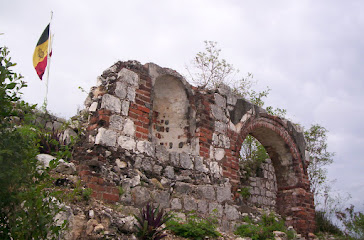
Pinnacle Gate Ruins
when the community flourished without police harassment. But Howell was a problem for the state- philosophically, socially, and, because he had become a leading ganja cultivator, economically. His calls for Black people to stop hailing the King of Great Britain and turn to The Emperor of Ethiopia led to his arrest for sedition earlier in the 1930s. His ganja production was the pretext for the 1954 raid on Pinnacle, where over 100 colonial police officers and detectives seized £3000 in cash and burned three tons of ganja stash. The authorities destroyed much of the Pinnacle, and after the last raid in 1958, no residents lived in the community.


Back o' Wall/Dungle and Coronation Market


Back o' Wall/Dungle was a sufferers' community in downtown Kingston-where Tivoli Gardens now stands, and it comprised roughly 5,000 people, an overwhelming amount of them Rastafarian. In 1958, Prince Emmanuel Charles Edwards kept the first-ever national "Groundation". This Nyahbinghi grounding took place in Back o' Wall and lasted for 21 days. After the convention, Rastas marched over to Coronation Market and planted their flag. The police promptly beat them, trimmed their dreadlocks, and locked them up. Later in May, police arrested Prince Emmanuel and burned down his Rastafarian camp.

Dungle
Back o Wall
From The Jamaican Daily Gleaner
Many describe this inaugural national Groundation as a decisive point in the antagonism between the Rastafarian movement, and the government and the public. The public, the police and security forces, and the media propagated the so-called anti-social elements of Rastafari. Society held disdain for the Rasta people. Later that year, more skirmishes: Police raided a Rastafarian camp in Westmoreland; in Linstead, a group of Rasta attacked two police officers, who shot and killed one of the dreadlocks. The police rounded up and arrested four more Rastas, who no one saw or heard from again.

In 1959, a Rastafarian security guard (or "gatekeeper") at Coronation Market (which stood next to Back o' Wall) had a dispute with a police officer on duty. The police beat this Rasta severely, which enraged the witnessing vendors at the market. Rasta, vendors, and sympathizers set state vehicles ablaze (allegedly). Police reinforcements rushed to the scene, clashed with the uprising, and moved their brutality over to nearby Back o' Wall where they unleashed retribution on the Rastas and other poor people living there. They kicked down doors; destroyed homes; arrested 57 Rastafarians, beat them, and further humiliated them by forcibly trimming their dreadlocks.

The Coral Gardens Incident 


Rudolph Franklyn had moved up from Moore Town, embraced the Rastafarian movement, and had grown a following amongst younger Rastas in the Coral Gardens/Montego Bay area. Franklyn did some small-scale farming on land in the Tryall Farm (land reportedly owned by the Kerr-Jarrett family) of Salt Spring. Landowners and local government officials planned to develop much of the local areas around Montego Bay for tourism. The police harassed the Rastafarians in the area continuously; they'd do all they could to run the Rastas off. Once they raided Franklyn's farm and reaped all the ganja they wanted, they chopped down the rest. Another time, they did the same. But Rudolph Franklyn was defiant; he insisted he was not squatting on anyone's land.* The police told him he was operating too close to Rose Hall.

At some point, the Kerr-Jarrett family sold their land to a man named Ken Douglas. In around October 1961, the new landowner sent the police to evict Franklyn, but this time, violence rang out. When the police rolled up to his farm, Franklyn was working with a cutlass or machete in hand. The police demanded he drop it. Franklyn refused. The police shot him five times in the stomach. (Some reports state they hit him with three shots; some report six shots. The police clearly shot him multiple times.)

The police left him for dead where he'd fallen and school children later discovered him. People rushed him to the hospital, and Franklyn received surgery. But a doctor informed him he wouldn't have a long life. 

"The headman of the property, Edward Fowler...brought a policeman to evict the brother (Franklyn) off the land. The unarmed brother was shot six times by the police, and believed to be dead, and was not taken to hospital until hours after. The brother recovered after months of medical treatment, although he was told by the doctor that he would live for only a short period. He was immediately sentenced to six months imprisonment on a charge of having ganja." - Journalist John Maxwell, in his article in Public Opinion, April 27, 1963
 
Franklyn was angry. He felt he was wrongly persecuted, shot maliciously and without cause and chronically injured. And though he was innocent in many people's view, he was tried, convicted and sentenced. According to people who knew him, when he was released in early 1963, Franklyn was a bitter man. And when police harassed him further, that did it. Franklyn desired revenge.
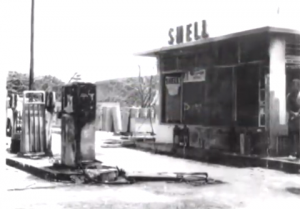

Before 5am on 'Holy Thursday', April 11, 1963, Franklyn and a group of Rasta bredren set fire to the Shell gas station owned by Ken Douglas. By midday that day, eight people were killed, including Franklyn, two of his bredren, two officers and three civilians (one being the headman of the Rose Hall property, Edward Fowler). Another three of Franklyn's crew had escaped, but were later captured and eventually hanged. 

"Bring in all Rastas, dead of alive!" - Prime Minister Bustamante, further telling police and soldiers that what the jails couldn't hold, the morgue would.


Police and soldiers rampaged over the next few days. They rounded up over 150 Rastafarians in four Jamaican parishes. Since the leader of the incident had already been killed, and his five accomplices killed or accounted for, most of the Rastafarians rounded up in the aftermath had nothing to do with the incident. Still, they were beaten and tortured, hair and beards trimmed; some were shot, and some killed. Civilians formed vigilante groups that also hunted and brutalized the Rastafarian bredren, stoning, beating them, and cutting them with glass bottles.


* In the film Bad Friday, Rudolph Franklyn's daughter stated that Franklyn had farmed on land that his father had left him. 

Sources:


Campbell, Horace. Rasta and Resistance: From Marcus Garvey to Walter Rodney


Maxwell, John and Desta Planno, Mortimo Togo. "Rastafari and the Coral Gardens Incident". The Jamaica Reader: History, Culture, Politics, edited by Diana Paton and Matthew J. Smith, New York, USA: Duke University Press, 2021, pp. 302-306. https://doi.org/10.1515/9781478013099-079


Saturday, July 23, 2016

Blessed Earthday, Rastafari

There is no night in Zion, there is no night there
HalleluJah there is no night there
Rastafari is my light
I&I need no candle light
HalleluJah there is no night there.

"Let Jah arise and let his enemies be scattered: let them that hate him flee before him. As smoke is driven away, so drive them away: as wax melteth before the fire, so let the wicked perish at the presence of Jah. But let the righteous be glad; let them rejoice before Jah: yea, let them exceedingly rejoice. Sing unto Jah, sing praises to his name: extol him that rideth upon the heavens by his name Jah (Rastafari) and rejoice before him."

Thursday, May 5, 2016

Snapchat, Don't Take Rastafari For Joke Business

                                                   by Kaya Omodele @TheAbeng Snapchat released a Bob Marley filter on/4/20 (April 20)  and people began striking out against it almost immediately. Now, some people mightn't understand the whole controversy, so here it is in a nutshell. You (Snapchat) letting users make their selfie images look like Bob Marley, complete with dreadlocks, skin tone and tam, is like you're taking the culture and turning it into one, big poppy show. NOT a good look! "...Bob Marley's music has done more to popularize the real issues of the African liberation movement than several decades of backbreaking work of Pan-Africanists and international revolutionaries." ~ Eusi Kwayana in Rasta And Resistance. You see, Bob Marley is our messenger, like a prophet, a social and cultural conscience. And, Rastafari is not a play-play thing, even though it might seem like dreadlocks is just a hairstyle nowadays. But know this: natty dreadlocks are sacred to Rastafari; they are an expression, a symbol, of a Rastaman's (or Rastawoman's) covenant to Jah Almighty. Dreadlocks are as important a symbol to Rastafari as a cross is to a Christian, as a beard is to an Orthodox Jew or a Muslim. Snapchat, you wouldn't provide a filter featuring that pointed, papal hat, would you? Or, a kufi, a hijab? Or Cheyenne chief Two Moon's headdress? (But maybe you see nothing wrong with "redskin" images either) The point is, Rastafari elders were persecuted back in the day- locked up, dreadlocks forcibly shorn. At  Coral Gardens in Jamaica some were killed. In Dominica, the John government gave the green light to shoot to kill any dreadlocks found trespassing on private property. So, please, don't bother with all these faux-dread tams, the dreadlock filters, and all the other Sambo-like caricaturizing of Rasta. Don't take Rasta for no joke business!

Monday, August 17, 2015

A Birthday Letter to Marcus Garvey

                                                  Earthday Letter to Marcus
                                                  Copyright 2015 K. Omodele

Most Right and Honorable Marcus Mosiah,
Greetings I bring on your 128th Earthstrong*. May the Most High, Jah, shower you infinitely with eternal blessings. Your message has lived on and your impact on the lives of millions all over the Earth illustrates brightly that word - sound is power. Before you ascended, humbly, seventy-five years ago, you told us we could find you in the whirlwinds...Some of us may have wondered whether waves of time might wash away your gigantic footprint.

Emphatically I say, this is not so. Many of us have not forgotten, will never forget. History strung up a lynching but ourstory absolves you. We, the People, trumpet your sound through the ages- even this one of information. Avenues and schools, world-wide, bear your name. We write and sing songs about you; read and write books that convey your story- ourstory (you said we should uplift and celebrate our own heroes). Marcus Mosiah, in Ghana (the former Gold Coast) the flag and the national football team are called the Black Star**; in Jamaica you are the first National Hero; in Rasta you are Prophet, complementing Priest and King.

We herald the principles for which you stood on-square. You uplift us still, inspiring us to see in ourselves the image of God. You shouted that there's nothing the mind can imagine that man cannot accomplish- did you ever imagine the U.S. could elect a Black president, one with an African name at that? And now there's an African Union, but Jah knows we could use your leadership there. Oh, did you see your beloved West Indies when we tried the Federation? Petty minds got in our way but you done already know how that goes. Now Caricom is our feeble response to your call for regional unity.

It's not an easy road we've travelled and we still have a mighty long way to go. But rest assured, Ababa Mose, your sons and daughters stand firm, work proud, walk with our heads high; as we trod Jah Earth your spirits breathes within us. Have a most blessed earthday.

Sincerely,
Kaya Omodele

Sunday, September 11, 2011

Melkam Addis Amet (Happy New Year): Enkutatash or Ras Awde Amet

Melkam Addis Amet (Happy New Year)


Today, September 11 is 
Mäskäräm 1, the first day in the first month of a new year in Ethiopia. In Amharic, the official language of Ethiopia, the word for New Year is Enkutatash* while in Ge'ez** the term is Ri'se Awde Amet.***


Queen Makeda

Enkutatash is traditionally an important day to Ethiopians. When Makeda returned from her visit to King Solomon, her chiefs gave her enku, jewels. Enkutatash has since been celebrated in the spring, which follows a three-month rain season. It is a time to celebrate new life, rebirth, a beginning, new hopes and dreams.
***Ras Awde Amet literally Head Anniversary. This term is preferred by the EOC/Ethiopian Coptic

Ethiopia and Egypt

The date traditionally is important in the ancient African Valley as it marks the the highest point of annual inundation of the River Nile and is recognized by Coptic traditions of the region as the end of Noah's flood. The Blue Nile flows from Lake Tana in the Highlands of Ethiopia while the White Nile flows through Sudan. They converge into one great river and its inundations represent annual resurrection and rebirth. Realize that an intimate connection between Egypt and Ethiopia has existed from ancient times. Recall that even from the Twenty-first Dynasty the two countries were sometimes under the same ruler and so, naturally, culture, arts, religion and philosophy were effectively interwoven.

In Egypt, the first month of the Season of 'Akhet'(Inundation) is called Thout. Today September 11 is Thout 1 on the Coptic calendar. The Ethiopian Calendar and The Egyptian Coptic Calendar are closely related and the names of months being the major difference. Both are derived from the ancient Egyptian Calendar

*Enkutatash እንቁጣጣሽ is literally "gift of jewels"

**Ge'ez is an ancient Ethiopian language from which Ahmaric is derived. Ge'ez is the official language of the Ethiopian Orthodox Church


Monday, May 9, 2011

Reasoning: Conspiracy Osama?

copyright K. Omodele


Monday morning, a cloud-draped second of May and the whole of New York City buzzing. All on the way from Brooklyn to Lower Manhattan, the subway car was a slow-rippling sea of Osama photos and Bin Laden headlines like: “Got Him! Vengeance at Last,” “US Nails the Bastard,” “Rot In Hell!” and people busy glancing around suspiciously each time the train stops and the doors open. By the time Trevor and Rudeboy march in the Malone Construction site, they feel like something, somewhere is ‘bout to pop off. They secure their lunch in a tool-storage chest as a couple of plumbers saunter pass, mumbling.
A lead plumber, Mike LaTronica, pumps his fist in the air.
“Got the son of a bitch!” LaTronica says. And as he’s sliding by, he nods up at lanky-limbed Rudie, who just handkerchiefs up his cane-rows, lifts his brow and blank stares down at the George Carlin-looking Italian.
Trevor chuckles shaking his head and dips into a supply container.
Bajan strolls in, Dickie’s starched up like if this a office work and not a bonafide, true-life construction site. “Wunna* see Obama last night? Is ‘bout time sumpm go right for the man.”
Dreadie and Spence come in almost on his heel back. Spence hands Dreadie a copy of the New York Daily News then trods over to the chest.
“Wha’ kinda cow manure drop outta Bajie mouth now?” Spence asks, stroking his scraggily, cotton-beaded beard.
The rest of them nearly drop dead with laugh.
“See deh, Bajie?” Rudeboy asks, pointing at Spence. “One month ‘pon the work and this man done know you good, good.”
Bajie wags his finger between Spence and Rudie. “I done already expect two Jamaicans to gang up one Bajan.”
Trevor exits the container slipping a dust-mask band over his mini-‘fro. Pulls the mask down unto his neck, and interjects. “Schups! Nonsense! It got nothing to do with JA. Ey Boi Bajie, all in Georgetown you’d be a skunt there too.”
More laughter.
Bajie skins his buck teeth. “HOWEVER, wunna can’t say I wrong. Obama need a good break. And killing Bin Laden? Just watch! The man approval ratings gon soar through the roof - all the republicans patting him on the back now.”
Spence looks around at the whole crew. “Then wait! Oonu* really think Osama bin Laden mastermind this whole bangarang**? Alone? With couple man and one bag a box-cutter?”
Bajie answers. “I telling you. I was right here in the City when them planes brought down them towers. Man, that was real. I was really hauling my ass up Broadway trying to get way from all that blasted-no pun-debris.”
“So, Spence wha’ you seh? You subscribe to the conspiracy theory thing?” Rudeboy asks.
Dreadie leans against a post. Unfolds the Daily News and dives into the front page.
Spence addresses Rudeboy directly. “I don’t know but some ah this sound like bare propaganda to me. None a oonu never stop and wonder how come this terrorist mastermind-who duck out di C.I.A, duck out di F.B.I., di National Security Council and every other US security agency; plus, Scotland Yard and MI6, NATO, Israel with them Mossad, not to mention the Pentagon and US Military with all them branches and Joint Chiefs of Staff-” each name is emphasized with a finger like a deliberate flicking of a ratchet knife, “and who did get training from di C.I.A in the first place and who done squeeze pass National Security one time already with a bumbling crew and them box-cutters, how this real-life, big, bad Al-Qaeda don couldn’t manage fi pull off just one more thing in nearly ten years? So how come American security fail so bad one time and then, all of a sudden, BRAP! it get perfect again, just so? Fool some people sometime. Cyaan fool everybody, everytime- Bob Marley tell yuh dat.”
Bajan asking. “So, it sound like you saying that no one name Osama bin Laden didn’t exist none at all. So what now? They invent that man?”
Trevor add in. “Well Bajie; Dread. I don’t know. I do know they in’t show we no body, ‘bout how they bury him at sea so we may never see one. Just like them aliens in area 51 or whatever. How we even know he exist or they kill him? Or they could be giving him some water treatment right now. Or some jump starting his scrotum with a car battery.”
Rude boy ponders for a moment. “One thing I do notice, though, is the White House and C.I.A. say how is the information they draw out from all them detainees in secret C.I.A. camps that lead dem to bin Laden. To me is like they using this ends to justify the camps and water-boarding and torture.”
Trevor deh ‘pon*** a roll now. “And a next thing too, the U.S. claim of killing bin Laden, in a sovereign nation the U.S. is not at war with, is a crime under international law.”
LaTronica is suddenly there outta nowhere– and just like Columbus- jumping in people thing without an invitation:
“So what? Like Malcolm X said, ‘By any means necessary.’ This asshole blew down the towers. My cousin died that day and we never even had a body to bury. Fuck that terrorist!” Face redding up.
Dreadie folds the paper tight and straight with military precision. “That’s what they called Mandela at one point, a terrorist,” he notes, tucking the paper in his back pack. “Until so-called world opinion change and he went from terrorist to freedom fighter to hero and president.”
LaTronica twists and stretches his neck. “That’s different. Mandela was fighting injustice against his people.”
“Mmmmm.” Dreadie utters, tight lipped. “I guess one man freedom fighter is the next man terrorist. Since you jumping in OUR conversation-,” Dreadie asks, “notice how all the rejoicing in the US streets starting to look exactly like streets in the mid-east back then?”
“You sound anti-American there, Dread. What’re you guys, unpatriotic? You gotta beef with Americans or something?” Mike says, squaring up his husky, roly-poly frame. “So why’d you’se even come here then?”
“Same reason your people came here,” Dread replies. Face straighter than Bajie pants seam.
Rudie eases in beside dread, and together they twin-towering LaTronica. Rudie says:
“But when we sign our papers or when we tek that oath we nuh give up we right to think fi weself. Dread, they tell you anything ‘bout dat?”
The others gather ‘round, even Bajan.
Dread glowers. “HMMMMPH! LaTronica, nobody here really care wha’ you want chat ‘bout. We reasoning amongst bredren. ”
Mike LaTronica doesn’ budge and some of his crew hustle over.
Next thing you know, you have a two sets a people lined off facing each other, talking loud and reckless with jaws clenched tighter than decisions about whether or not to release Osama’s death photos.
The brisk morning is laden down with a mix of tension and testosterone.

*you plural. As in “you all.”
**uproar, disorder, or disturbance
***(deh ‘pon) literally “there upon”; meaning: is on

"I mourn the loss of thousands of precious lives, but I will not rejoice in the death of one, not even an enemy. Returning hate for hate multiplies hate, adding deeper darkness to a night already devoid of stars. Darkness cannot drive out darkness: only light can do that. Hate cannot drive out hate: only love can do that." - Martin Luther King Jr


Thursday, April 21, 2011

Rodney Reasoning


©2011 K.Omodele
 
It’s 12:35 p.m. one damp April day in Lower Manhattan. The Malone Construction labor crew’s collective spirit seems subdued by the gray, spring-time air. They slowly crumple up paper bags; dispose empty plastic bags and bottles, while palavering away the rest of their lunch break.
Rudeboy braces his back against a steel column, digging his gums with a toothpick. “Yow. Mi see di Vibez Kartel lecture at UWI* pon Youtube the other night. Maddd!”
Spence, the three-week-new laborer on the site, pulls down his specs and looks up at the six- plus, stick-thin youth.
“When yuh say ‘maddd’, wha’ you mean?” Spence asks, raking work-bent fingers through his steel-wool, smoke-white ‘fro.
Rudie removes a Newport from behind his ear, relights it and sucks the smoke into his magga** chest cavity. “Then, you nuh see how the man handle the UWI crowd? Intelligent and smooth…stylist,” he replies, a river of smoke winding around his words.
Bajie pours the remnants of coffee from his Thermos, and then authorizes himself into the reasoning like some member of parliament. “Finally, you and me can agree on something, Rudeboy. He surprised me. He actually held a decent position, though I wouldn’t exactly call that intelligent.”
“Wha’ you woulda call it, then?” Rudeboy gestures in the air with his cigarette like a music conductor. “How many entertainers you know that coulda hold their own inna that kinda university lecture setting?”
Dreadie, forever a voice of reason, throws in his two shillings. “Rudie, Kartel mek a mockery of the academic platform. A UWI lecture? That suppose to be serious. Wha’ yuh seh, Trevor? You see it?”
Trevor guzzles the last of his water, rumble belches then says, “The man treat the whole thing like a self-serving, press conference. And mek it worse, he tried tie-in Marcus Garvey and Walter Rodney.”
Dread shakes his forefinger. “Yuh catch that? When he said ‘Sir Walter Rodney’?”
Rudeboy bull-rushes in with an interjection. “And wha’ happen to that?”
Dreadie whips out a hand-kerchief and waves it like a matador at Rudeboy. “Is Doctor Walter Rodney. Not Sir.”
Spence adds. “Kartel mussy confuse Walter Rodney with Sir Walter Raleigh.” Chuckling. “How you fi confuse the Brother, di Comrade, professor of African studies with a ole pirate.”
The whole crew cracks up, even Rudeboy.
At precisely 1PM, they grab their helmets and drag themselves into the building.

It’s now around 5:15 and the crew is trudging up Broadway toward the Park Place subway. Each man is seeking the no. 2 train, destination: Flatbush. ‘cepting Bajie of course, who, true to his contradictory form, is the only one catching the E to Queens.
Spence continues the reasoning from earlier. “Y’know, Rodney’s legacy LARGE when it come to the University… graduated there; taught there. As a matter of fact, when Hugh Shearer kick him outta JA, is the UWI students first tek up protest. And is that protest lead to the Rodney Riots in ‘68.”
Rudeboy now looks puzzled. “The government kick him out? Fi wha?”
“Actually, they barred him from coming back into Jamaica,” Bajan says. “Sent him right back to Guyana. Is Trevor them homeboy.”
Spence cut his eyes at Baj. “Kick him out beca’ they label him the single greatest threat to Jamaican security at that time.” Realising he is commanding Rudie’s full, yet confused attention, he continues. “See, Rodney taught African history. Plus he preached bout Black Power and was a Garveyite, which scared the hell outta them. Then he was a Marxist that chastised Capitalism and classism.”
Dreadie injects. “So you know that had them paro .”
“Hold on, now!” Bajie stops them. “Garvey was a capitalist. Rodney was a socialist. How in the hell he gon be a Garveyite?”
“How yuh mean? Is not me say so! Rodney proclaim himself a Garveyite. And in any case Garvey dealt with community and Rodney with Communalism.” Spence answers. “Anyhow, Rudie, they labeled him a subversive element when di man come venture down inna the ghettoes and gullies, talking with poor people and reasoning with Rasta youth. Rudebwoy, yuh need to read Groundings With My Brothers.”
Rudeboy nods. “I seen it.”
“Yuh read it?”Dreadie asks.
“Ehn-enh. But I know them kill him down inna Guyana, right?” Nodding at Trevor.
Trevor clears his throat. “Yeah man. Is like a Malcom X type ah thing. His own matty Black brother kill him. Boom him up.”
They reach the subway entrance .
Dreadie adds. “The President of Guyana himself-Burnham, order the hit!”
Before they descend down underground and part ways with him, Bajie smirks. “I surprised you didn’t claim the C.I.A. Oonu*** damn conspiracy theorists.” He runs down the steps taking two at a time and heads for the Uptown side.
Spence cries out. “Cho! But then who yuh think sanction it? Nuh di C.I.A.? Is them behind all the political fuckery back in them days. All up to now!”
The rest of them swipe their cards, and as they make way down to the Brooklyn side, Dreadie nods in approval.
“Yeah yuh right. But yet still, Burham had it out for him.”
They reach the platform. Up the platform towards the escalator, three youths gang up on a fourth, beating him down. The construction crew looks on as the gang pulverizes the helpless boy, slicing his face with a box-cutter.
“One thing for sure though, Rodney influence Rasta in nuff a them small Eastern Caribbean islands. Notice how them Rasta deh in Grenada militant, bad. They all help overthrow Gairy. Is Rodney that. Everywhere that man went, when he see the establishment oppressing and victimizing the poor, he sound out against it.” Trevor responds.
But everone is now focused on the scene up the platform. 
Trevor continues, as he begins making his way toward the ruckus. “That’s why nuff government couldn’t stand him. They ein’t want no talk of revolution. And besides, the Cold War was being fought right down there in the West Indies- Cuba, JA, GT, Grenada. We ein’t stand a chance, bout we aligning weself with either one a them Super Powers.”
Dreadie declares, “Vampires. Babylon them!” and unsheaths a hammer while stepping up the platform.
“True! The whole a them.” Spence says. He grabs a screw driver from his utility belt.
The construction crew picks up pace. Burst into a rush up the platform, drawing tools from their bags and utility belts as their train rumbles toward them in the distance.
The clack-clack of the train riding the track grows louder.
The platform vibrates.

*University of The West Indies
** extremely slim, skinny
***you, you all


Saturday, November 6, 2010

Abeng Tribute: Gregory Number One


Gregory Number One
Copyright 2010 K. Omodele

6:45 A.M. and sunrise is pecking, struggling to hatch through the Manhattan skyline. Two dozen laborers with Malone Construction hardhats are milling around a group of tool chests, sipping steaming coffee, chatting in cliques, each silently dreading the impending workday. Their muscles ache; breathing is highlighted by streams of condensation.
“Yow!” A bamboo-limbed youth shouts before lighting a cigarette. Drags smoke deeply into his lungs then feverishly sands his calloused hands together. “One minute ah silence for the Cool Ruler, nuh man.” Rudeboy demands heavily.
Dreadie crams his locks into one extra-large hardhat ‘til it sticks cocked-up on his head Velcro tight. Shakes his head and pounces on him. “Yuh don’t hear lung cancer tek him way? Drop the Oldport them Rudie!” Gesturing to box the cigarette out his bredren’s hand.
They take shield from the late-autumn wind behind a mortar-laced, cinder-block wall.
A tree-stump man with ringed, saucer eyes joins them, skinning his teeth. “Yuh hear wha duh man say? Drop the cancer stick!”
Rudeboy pulls his coat collar up and leans a shoulder ‘gainst the wall. “Ay Trevor; yuh favor Guyanese patoo.*”
They all buss out a laugh.
Trevor continues. “Man all the great singers dying off: Dee Brown, Sugar Minott- when di foundation gone, wha’ left?”
“Ah rate Gregory over all them, still,” Rudeboy interjects. Pulls on the cigarette.
Trevor adds. “Me tuh.”
Dreadie whips his forefinger against his middle and thumb. “Gregory was the definition of artist. Art-is-try!”
Bajie marches up to them like some corporal in the B.D.F.**, drinking from a Thermos cup. Grinning out the corner of his eye, he snaps. “According to who?”
“According to I- Dreadie’s Sidewalk Knowledge Collegiate Dictionary, yuh mad rass yuh.” He licks back. “Anyhow, the definition of an artist is someone who creative expression inspire or who leave some kind ah impression on people; a great artist move the masses.”
Bajie sips with his pinkie out as if its tea time somewhere in Christ Church. “And? You want rate Gregory Issacs over Dennis Brown? Wunna mad or what?”
“Or whot? All up in yuh nose.” Trevor mimics, laughing. “Yeah man. Gregory ragamuffin.”
Bajie doesn’t let go. “Dennis Brown voice sweeter than a nightingale.”
Rudeboy bounces off the wall and outs out his cigarette. “Yuh never hear Gregory siddung pon a riddim yet?*** Listen Tune In! ‘I said I like it like dat.’” He sings, head and shoulders dippinging to a rhythm in his memory bank.
“Yeah?” Bajan challenges. “So wha bout Should I? Yuh talking bout a singer riding a riddim? ‘How can I go on feeling this waaay?/Acting like a child so young and gaaaay?/ YOU DON’T KNOW-”
Dreadie and Trevor chime in, grinning. “-WHAT IT MEANS TO BE LOVED.”
“Oh-Oh, Rudeyouth.” Dreadie says, eye brow arching. “Bajie want go tune fi tune.”
“Bajan a idiot. When I need fi pick myself up off di ground, I just play ‘One man against the world/” Rudeboy croons, gyrating his wiry frame, gun fingers cocked and poised.
The others rise gun fingers in the air, saluting. “BOOM! BOOM!BOOM!”
Still half-asleep, other workers gaze curiously over at the West Indians.
Bajie bend up his mouth like he not the least impressed. Raises one hand in the air, bounces and chants:
“Do you know what it means to-“
The rest of them sing along. “-HAVE A RE-VO-LU-TION?”
The whole clique is now wide awake, laughing and touching fists.
The lead plumber, Mike LaTronica, waddles over to them. “Trevor! You working or you gonna sing Calypso there all day, Harry Belafonte?”
Trevor straightens his face. “Nah. I gon stand over here wid you and sing Figaro, Pavorotti.”
More laughter.
Trevor goes off to flux and prep joints with the plumber.
With emptiness plowing in their hearts, the others trudge over to their respective work crews. 

* Owl                                                                More Construction Crew Stories on The Abeng...
** Barbados Defense Force                                                Reasoning: Conspiracy Osama
*** Sit down on the rhythm                                                        Cupful Reasoning

Copyright 2010 K. Omodele


Enhanced by Zemanta

Wednesday, December 2, 2009

Short Story: Tempting Irie

Copyright 2007 K.Omodele (Tempting Irie)


Part I
(Introducing Irie and Sukunya)

Old year’s night and one millennium hurtles toward the next. The depths of a Flatbush studio apartment whisper blackness. In the front, scarce streetlight tumbles through a monolithic window and falls flat a couple feet beyond the sill. 11:37 PM glows neon blue against the darkness. Overworked, a radiator hisses in protest.

Sukunya fidgets on a wicker settee. She grins, but her eyes scurry about the room like a condemned woman, strapped in, dreading the marching time. She squints as she settles on a figure planted behind the desk by the window, which frames Prospect Park’s skeletal landscape.
Outside, down two floors of corroding fire escape, teens gaggle and shriek on the stoop. They stumble drunkenly in and out of the building’s vestibule.
Jay-Z crackles through a Phil Collins sample. “You belong to the city/You belong to the night…” A horn screams, brakes EEK and upstairs a mother shrills from a window. “ MEEKA. Haul yuh rass in this house. NOW!!!”
"prospect park, brooklyn 2005" by postopp1 
is marked with 
CC BY-ND 2.0.

These sounds limp through the half open window and nudge the stillness in the apartment. Sukunya spills more Brunello di Montalcino into her golden cup.
She sips.
She slurs:
“So Irie, you don’t never think bout me- why men always fighting over me?” She strums her swells- breasts, hips, curve of her butt. Prattling, she arches her back and cocks her legs limberly up on the settee. A purple, silken camisole clings to her bronze skin which glistens like melting ice.
But Irie doesn’t notice. On a stacked milk-crate throne, he hunches over an unpolished, raw-pine desk. Light from outside feebly captures the concentration carving his features. Whittled brows glower as he slices a half-dozen Indica buds with a ratchet so keen, it can divide light from the darkness. Each drag of the knife scars the Steel Pulse “Armageddon” album cover he uses as a cutting board. He pauses. Removes his leather buckas-styled tam and Congo-natty locks cascade heavily over his stone-cut shoulders. A worn reprint of Bob’s “Confrontation” shield’s his chest.
Sukunya splays her thighs, bracing an elbow on a knee.
“I know you feel me, Irie. Can’t ig me forever.” Snaking fingers twine the gold, precious stones and pearls coiling up her neck.
She slips a glimpse off the clock. 11:40.
A light sliver ignites her cat eyes for an emerald second. “I see you watching me when I’m with Blacka. And Lenky. Or, when I’m hugging up Worries over in New Lots.” Puckering scarlet lips, she puffs him an air kiss. “Yep! I know you want me, Irie Dread. Act like you don’t, but you need me.”

Irie fluffs the sliced up ganja. Fingering the ring on the ratchet, in a single, fluid motion he flicks the blade shut and pockets it. Then he retrieves a challawa from the desk and packs the kutchie with herb. He begins chanting...
(To Be Continued...)

READ TEMPTING IRIE PART II (The lit up finale)


Enhanced by Zemanta


Monday, September 21, 2009

Resilience Through Icestorms

"Our greatest glory is not in never falling, but in rising every time we fall." -Confucius
"There is no better teacher than adversity. Every defeat, every heartbreak, every loss, contains its own seed, its own lesson on how to improve your performance next time." -Malcolm X 

The thing I love most about lyrical word play is its ability to inspire. Word-Sound-Power. One of my favorite poems of all times is Maya Angelou’s “Still I Rise.” The Elder painted the resiliency of the Human I-rit (spirit) with such crimson emotion and golden underlining conviction; I hung her masterpiece in my personal Louvre (Locker 212, along with other works by lyrical artists). Her imagery makes me want to get up, stand up…rise like the Phoenix outta despairing ashes.

Jah knows people need inspiration in these jagged times of socio-economic strife. Some of us looking to the sky for a messiah and praying to heavens that a solution soon fall from above. Nothing nah goh (not going to) drop from the sky, Bredren and Sistren-the Most High reigns from within. We all have an inherent spirit of resilience because Divinity is within us, just tap into it and let the energy flow. Word-Sound drums up Power. Positive lyrics can uplift during the wickedest trials and tribulations… Writers, singers, wordsmiths, better know-ledge!

-© K. Omodele 2009


Even Icestorms in July (Intro)
©K. Omodele April 2003


Barbed tape at a prison

Tomorrow morning I begin the rest of my life. Man, if you could feel how cold it gets in here, you'd overstand my anxiety for the gradual thawing that my tomorrow promises. As late as the night is, my anticipation for this promise of warmth is what deprives me sleep. It has kept me awake at night, 3,128 to be exact. That's how long I've been exposed to this frigidness. That's a long time-a minute. A looong minute, I know. Something inside me should have died by now, you know-from exposure.
I can barely stand it. Especially at night when I'm on my bunk, alone with my thoughts, the reflections of memories-some vague with the passing of time, others sharp despite it. Only the voice from my radio and solemn songs from the 70's keep me company. This is when the cold is at its lonely worst. It seeps through me, penetrating flesh and bone, until it is imbedded in my spirit, causing my soul to shiver at the steel and concrete and razor wire that engulf it.
Seasons change, but the cold is omnipresent. Something inside me should've died by now.
But, like the sun, it burns continuously in the midst of an algid, empty galaxy, obstinately refusing to succumb to the icy nothingness. And tonight, as I await the dawn, I feel it-this thing that is enflamed deep within me. Is it a ray of emotion ... a spark of hope? ... It is an antiquated remembrance ...

-© K. Omodele April 2003


Related Posts Plugin for WordPress, Blogger...

Featured Post

Spoken Word Griots: African Oral Tradition in Caribbean Music (Third Part) - Calypso

Spoken Word Griots: African Oral Tradition in Caribbean Music (Third Part) - #Calypso by K. Omodele African traditions and customs are i...

Popular Posts