Related Posts Plugin for WordPress, Blogger...
Get Our Free Newsletter
Showing posts with label Rastafarian. Show all posts

Thursday, April 14, 2022

Bad Friday 1963: The Rastafari Persecution at Coral Gardens


Coral Gardens lies on the North Coast of Jamaica, W.I., in the eastern outskirts of
Montego Bay; it's a part of the Rosehall Estate. Back in the late 1950s and early 1960s, groups of Rastafarians squatted on the land and farmed ganja on a small scale in the area. The landowners and businessmen around Coral Gardens had it in their minds to make the area a tourist haven, but Rastas stood in the way. Tension engulfed the authorities and Rastas like thick ganja smoke.

Now this is before Bob Marley and other reggae artists helped swing Rastafari into the mainstream. Back then, anti-Rasta sentiment choked much of Jamaican society. Many saw Rasta locksmen as vagrants, degenerates, and even referred to them as "Blackheart Man"; and police and people would often gang up on Rastas, beat them and sometimes kill them. Because of the brutality much of the society meted out, Rasta bredren and sistren would avoid public spaces, preferring to gather in their own encampments and yards. Even so, police and soldiers would storm, raid, and turn their homes upside down. They would evict Rasta and destroy their shanty homes.


Rastafari Plight in The 50s Jamaica 


Leonard P. Howell and The Burning of The Pinnacle

"...the streets of Jamaica (Kingston and St Catherine in particular) were energised by the inspired preaching and teachings of the Honourable Leonard Howell, one of the earliest Rastafarian pioneers." ~ Yasus Afari, Overstanding Rastafari-Jamaica's Gift to the World
In 1940, Leonard Percival Howell (also called Gonganguru, G.G. Maragh, and The "First Rasta") formed the Pinnacle commune at Sligoville, high in the hills of St. Catherine, Jamaica. Pinnacle was the first autonomous, self-governing, self-sustaining Rastafarian village. Members of the community farmed food for their own consumption, then sold the surplus at markets in Spanish Town and Kingston. Howell and members of Pinnacle operated a bakery; created handcraft; burned hardwood, then consumed and sold charcoal from that burnt hardwood. They also farmed ganja, which they smoked as the sacrament (and also used for medicine) and the surplus was another source of revenue, one that led to economic independence for the entire community. The Pinnacle commune was enterprising, and it thrived with thousands of residents.


From its inception, police raided Pinnacle multiple times. However, there was a ten-year period of peace (from about 1944 to 1954),
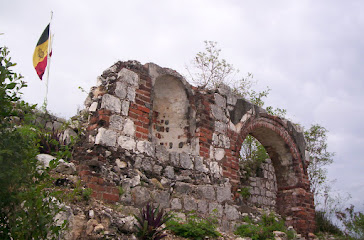
Pinnacle Gate Ruins
when the community flourished without police harassment. But Howell was a problem for the state- philosophically, socially, and, because he had become a leading ganja cultivator, economically. His calls for Black people to stop hailing the King of Great Britain and turn to The Emperor of Ethiopia led to his arrest for sedition earlier in the 1930s. His ganja production was the pretext for the 1954 raid on Pinnacle, where over 100 colonial police officers and detectives seized £3000 in cash and burned three tons of ganja stash. The authorities destroyed much of the Pinnacle, and after the last raid in 1958, no residents lived in the community.


Back o' Wall/Dungle and Coronation Market


Back o' Wall/Dungle was a sufferers' community in downtown Kingston-where Tivoli Gardens now stands, and it comprised roughly 5,000 people, an overwhelming amount of them Rastafarian. In 1958, Prince Emmanuel Charles Edwards kept the first-ever national "Groundation". This Nyahbinghi grounding took place in Back o' Wall and lasted for 21 days. After the convention, Rastas marched over to Coronation Market and planted their flag. The police promptly beat them, trimmed their dreadlocks, and locked them up. Later in May, police arrested Prince Emmanuel and burned down his Rastafarian camp.

Dungle
Back o Wall
From The Jamaican Daily Gleaner
Many describe this inaugural national Groundation as a decisive point in the antagonism between the Rastafarian movement, and the government and the public. The public, the police and security forces, and the media propagated the so-called anti-social elements of Rastafari. Society held disdain for the Rasta people. Later that year, more skirmishes: Police raided a Rastafarian camp in Westmoreland; in Linstead, a group of Rasta attacked two police officers, who shot and killed one of the dreadlocks. The police rounded up and arrested four more Rastas, who no one saw or heard from again.

In 1959, a Rastafarian security guard (or "gatekeeper") at Coronation Market (which stood next to Back o' Wall) had a dispute with a police officer on duty. The police beat this Rasta severely, which enraged the witnessing vendors at the market. Rasta, vendors, and sympathizers set state vehicles ablaze (allegedly). Police reinforcements rushed to the scene, clashed with the uprising, and moved their brutality over to nearby Back o' Wall where they unleashed retribution on the Rastas and other poor people living there. They kicked down doors; destroyed homes; arrested 57 Rastafarians, beat them, and further humiliated them by forcibly trimming their dreadlocks.

The Coral Gardens Incident 


Rudolph Franklyn had moved up from Moore Town, embraced the Rastafarian movement, and had grown a following amongst younger Rastas in the Coral Gardens/Montego Bay area. Franklyn did some small-scale farming on land in the Tryall Farm (land reportedly owned by the Kerr-Jarrett family) of Salt Spring. Landowners and local government officials planned to develop much of the local areas around Montego Bay for tourism. The police harassed the Rastafarians in the area continuously; they'd do all they could to run the Rastas off. Once they raided Franklyn's farm and reaped all the ganja they wanted, they chopped down the rest. Another time, they did the same. But Rudolph Franklyn was defiant; he insisted he was not squatting on anyone's land.* The police told him he was operating too close to Rose Hall.

At some point, the Kerr-Jarrett family sold their land to a man named Ken Douglas. In around October 1961, the new landowner sent the police to evict Franklyn, but this time, violence rang out. When the police rolled up to his farm, Franklyn was working with a cutlass or machete in hand. The police demanded he drop it. Franklyn refused. The police shot him five times in the stomach. (Some reports state they hit him with three shots; some report six shots. The police clearly shot him multiple times.)

The police left him for dead where he'd fallen and school children later discovered him. People rushed him to the hospital, and Franklyn received surgery. But a doctor informed him he wouldn't have a long life. 

"The headman of the property, Edward Fowler...brought a policeman to evict the brother (Franklyn) off the land. The unarmed brother was shot six times by the police, and believed to be dead, and was not taken to hospital until hours after. The brother recovered after months of medical treatment, although he was told by the doctor that he would live for only a short period. He was immediately sentenced to six months imprisonment on a charge of having ganja." - Journalist John Maxwell, in his article in Public Opinion, April 27, 1963
 
Franklyn was angry. He felt he was wrongly persecuted, shot maliciously and without cause and chronically injured. And though he was innocent in many people's view, he was tried, convicted and sentenced. According to people who knew him, when he was released in early 1963, Franklyn was a bitter man. And when police harassed him further, that did it. Franklyn desired revenge.


Before 5am on 'Holy Thursday', April 11, 1963, Franklyn and a group of Rasta bredren set fire to the Shell gas station owned by Ken Douglas. By midday that day, eight people were killed, including Franklyn, two of his bredren, two officers and three civilians (one being the headman of the Rose Hall property, Edward Fowler). Another three of Franklyn's crew had escaped, but were later captured and eventually hanged. 

"Bring in all Rastas, dead of alive!" - Prime Minister Bustamante, further telling police and soldiers that what the jails couldn't hold, the morgue would.


Police and soldiers rampaged over the next few days. They rounded up over 150 Rastafarians in four Jamaican parishes. Since the leader of the incident had already been killed, and his five accomplices killed or accounted for, most of the Rastafarians rounded up in the aftermath had nothing to do with the incident. Still, they were beaten and tortured, hair and beards trimmed; some were shot, and some killed. Civilians formed vigilante groups that also hunted and brutalized the Rastafarian bredren, stoning, beating them, and cutting them with glass bottles.


* In the film Bad Friday, Rudolph Franklyn's daughter stated that Franklyn had farmed on land that his father had left him. 

Sources:


Campbell, Horace. Rasta and Resistance: From Marcus Garvey to Walter Rodney


Maxwell, John and Desta Planno, Mortimo Togo. "Rastafari and the Coral Gardens Incident". The Jamaica Reader: History, Culture, Politics, edited by Diana Paton and Matthew J. Smith, New York, USA: Duke University Press, 2021, pp. 302-306. https://doi.org/10.1515/9781478013099-079


Monday, July 27, 2015

THREE KINGS AND A KETE DRUM IN DC

                                          copyright 2015 K. Omodele

When Kenny sent the invitation, the kings were tickled by the gold calligraphy and trimming and the request to R.S.V.P. But family is family, y'hear, so that sabbatical morning Irie, I-bo and Bongo drove from New York to D.C., a three-hour ride that stretched out to five due to them getting stopped and searched twice on I-95. By the time they parked at Union Station, they' just missed the ceremony.
Draped in flowing white Rastafarian robes and turbans, they caught sight of all them stiff-necked senator and dignitary types and realized:
"One day when we bent up and gray, we going laugh at this."
"Right. Laugh 'til we belly buss."
A sign pointed out the Clarke and Weatherman Wedding. The followed it like Wise Men trailing the Eastern Star and entered a world of glass walls and marble floors, where spectacular chandeliers loomed over linen-clothed tables. Someone greeted them and they were ushered to a table carded with their government names, while Black D.C. aristocracy, which now resided out in Montgomery and P.G. Counties, sat frozen with jaws bouncing off the polished floor and eyes spread wide as poached egg whites, taking in the sight of the three kings in dreadlocked beards. One king strapped with a Kete drum.
Joanna, the shiny bride jumped up, grabbed her gown tail and burst a sprint over before anybody could blink. Kenny trudged stiffly behind her.
"Glad you guys made it," she said. "Bongo, you gotta beat the drum for me-"
"Kete. Is a Kete drum." He placed the wooden, hand-painted drum on the white linen table cloth.
Kenny hailed them up, laughing nervously. "Bredren, you just had to walk with the drum? Here? Today?"
Joanna shooed him. "Of course they did." Then she announced, "Everyone, these are Kenrick's two brothers and his cousin, my brand-new In-Laws."

Sunday, September 11, 2011

Melkam Addis Amet (Happy New Year): Enkutatash or Ras Awde Amet

Melkam Addis Amet (Happy New Year)


Today, September 11 is 
Mäskäräm 1, the first day in the first month of a new year in Ethiopia. In Amharic, the official language of Ethiopia, the word for New Year is Enkutatash* while in Ge'ez** the term is Ri'se Awde Amet.***


Queen Makeda

Enkutatash is traditionally an important day to Ethiopians. When Makeda returned from her visit to King Solomon, her chiefs gave her enku, jewels. Enkutatash has since been celebrated in the spring, which follows a three-month rain season. It is a time to celebrate new life, rebirth, a beginning, new hopes and dreams.
***Ras Awde Amet literally Head Anniversary. This term is preferred by the EOC/Ethiopian Coptic

Ethiopia and Egypt

The date traditionally is important in the ancient African Valley as it marks the the highest point of annual inundation of the River Nile and is recognized by Coptic traditions of the region as the end of Noah's flood. The Blue Nile flows from Lake Tana in the Highlands of Ethiopia while the White Nile flows through Sudan. They converge into one great river and its inundations represent annual resurrection and rebirth. Realize that an intimate connection between Egypt and Ethiopia has existed from ancient times. Recall that even from the Twenty-first Dynasty the two countries were sometimes under the same ruler and so, naturally, culture, arts, religion and philosophy were effectively interwoven.

In Egypt, the first month of the Season of 'Akhet'(Inundation) is called Thout. Today September 11 is Thout 1 on the Coptic calendar. The Ethiopian Calendar and The Egyptian Coptic Calendar are closely related and the names of months being the major difference. Both are derived from the ancient Egyptian Calendar

*Enkutatash እንቁጣጣሽ is literally "gift of jewels"

**Ge'ez is an ancient Ethiopian language from which Ahmaric is derived. Ge'ez is the official language of the Ethiopian Orthodox Church


Friday, September 9, 2011

Word, Sound, Power: TriUne (Tribute to Rastafari in Transition)


(Never Gone! Never Forgotten!)


Word, Sound, Power: TriUne (Tribute to the Rastafari in Transition )
copyright K. Omodele 2011 

 Man, Know Thyself
Physically, Mentally, Spiritually
Eye and Eye
i. i n I
Prophet, Priest, King
Word, Sound, Power
Kete, Fundeh, Bass
Second, Minute, Hour
Ites (Red), Gold, Green
Knowledge, Wise-mind, Overstanding
One! One! One!
  Aim,       God,     Destiny
Air, Water, Fire
(EARTH)
Breath, Chalice, Fire
(SACRAMENT)
Man, Wombman, Child
(FAMILY ESSENCE)
 Light, Love, Life
(LIVE)
Man, Know Thyself
Africa, Carry beyond (Caribbean), Americas
Prophet, Priest, King
Word, Sound, Power
Sun, Moon, World
Second, Minute, Hour 
Head, Body, Soul
 Justice, Livity, Truth
Father, Mother, Child
the Elders, The Movement , the Youth
the Abeng, the Shaker/shak shak, the Akete
Word, Sound, Power

Wake Up! LIVE-aspora
cyaan dis di Tri-Unity
Conceptualize...
Beyond...
the Box.


Wednesday, August 17, 2011

Top Seventeen Sayings and Quotes by Marcus Mosiah Garvey

Marcus Garvey was born on August the seventeenth, and so this is a blessed day in my Journey. On this day a man was born in 1887 who would affect the way I perceive my SELF in relation to my community and my place in the world in general. Black Marcus screamed Self-identity, Self-worth, Self-reliance, Self-improvement, not just in the context of the singular person, but in the greater context of Black Community. In honor of the most Right and Honorable Marcus Mosiah Garvey's earthstrong/earthlight/earthday (birthday), I have composed this list of seventeen immensely memorable phrases, sayings and quotes from the Prophet that have influenced I, Kaya. SALUTE, Black Marcus!

17. Having had the wrong kind of education, the Negro has become his own greatest enemy.

16. The ends you serve that are selfish will take you no further than yourself but the ends you serve that are for all, in common, will take you into eternity.

15. Chance has never yet satisfied the hope of a suffering people.

14. We must canonize our own saints, create our own martyrs, and elevate to positions of fame and honor black men and women who have made their distinct contributions to our racial history. Sojourner Truth is worthy of the place of sainthood alongside of Joan of Arc; Crispus Attucks and George William Gordon are entitled to the halo of martyrdom with no less glory than that of the martyrs of any other race. Toussaint L'Ouverture's brilliancy as a soldier and statesman outshone that of a Cromwell, Napoleon and Washington; hence, he is entitled to the highest place as a hero among men. Africa has produced countless numbers of men and women, in war and in peace, whose lustre and bravery outshine that of any other people. Then why not see good and perfection in ourselves?

13. If you haven't confidence in self, you are twice defeated in the race of life. With confidence, you have won even before you have started.

12. I do not speak carelessly or recklessly but with a definite object of helping the people, especially those of my race, to know, to understand, and to realize themselves.

11. Lift up yourselves, men, take yourselves out of the mire and hitch your hopes to the very stars themselves. Let no man pull you down, let no man destroy your ambition, because man is but your companion, your equal; man is your brother; he is not your Lord, he is not your sovereign master.

10. The Mystic Touch Many years ago we fell asleep by the sedative of the superman, but the mystic magic of nature wand says awake and rise again. Too long has thou slumbered, too long has time passed you by, your work on earth is delinquent and you cannot reign on high. If it's true that you've awaken, good for you,

9. We must give up the silly idea of folding our hands and waiting on God to do everything for us.If God had intended for that, then he would not have given us a mind. Whatever you want in life, you must make up your mind to do it for yourself
  
8. Liberate the minds of men and ultimately you will liberate the bodies of men.
  
7. We Are Arbiters of Our Own Destiny. God and Nature first made us what we are, and then out of our own creative genius we make ourselves what we want to be. Follow always that great law.
  
6. Our UNION MUST KNOW NO CLIME, BOUNDARY, or NATIONALITY… PRACTICE ONE FAITH, that of Confidence in themselves, with One God! One Aim! One Destiny! Let no religious scruples, no political machination divide us.
  
5. If the white man has the idea of a white God, let him worship his God as he desires. If the yellow man's God is of his race let him worship his God as he sees fit. We, as Negroes, have found a new ideal. Whilst our God has no color, yet it is human to see everything through one's own spectacles, and since the white people have seen their God through white spectacles, we have only now started out (late though it be) to see our God through our own spectacles.The God of Isaac and the God of Jacob let Him exist for the race that believes in the God of Isaac and the God of Jacob. We Negroes believe in the God of Ethiopia…

4. I know no national boundary where the Negro is concerned. The whole world is my province until Africa is free.
  
3. Look to Africa for the crowning of a Black king; for the day of deliverance is near.
  
2. A people without the knowledge of their past history, origin and culture is like a tree without roots.
  
1. A reading man and woman is a ready man and woman, but a writing man and woman is exact.


Saturday, May 7, 2011

Seeking Makeda I: (Journey into Sound)


All rights reserved for The Abeng and My Conscious Pen/
YardCore International, Inc. Publishing

Seeking Makeda I:  (Journey into Sound)
copyright 2011 K. Omodele

Because Makeda is still a symbol of the epitome of African wombmanhood, there was never a time when the Empress was not…

...Empress Divine…
like destiny enshrined in mind and time
as gems essence glows in Solomon’s mines
sublime, King Solomon’s sun-burned sweet
divinely implanted life's breath, heart beat


breath takes
pulse race

pul-sates,
re-so-nates

rhy-thm
re-peats

ke-te,
fun-deh,  bass


vintner’s red glint in long ling-er-ing kiss
on Rosa-moist lips inhaled soul-ful bliss


copyright 2011 K. Omodele


Tuesday, October 27, 2009

Ital Stew

©K.Omodele 2007  

Ital stew is that book you cannot put down. The flavor excites. You anticipate the climax, and then savor it. You dread the denouement.
Vegetables and ground provisions are colorful characters brought to life in the folds of a good ital stew. Bright, upbeat yams, dutty-tinted sweet potatoes, irate orange pumpkins and simple off-white Irish potatoes conspire to supplant stringy, strenuous cassava- who for me is starboy.
There on the side lurks envious-green Calaloo, sulking, knowing she is only a side character. The whole mix is antagonized by an angry gang of fiery peppers, flagging colors red, yellow and green. Adding even more spice to this intricate plot is scallion and a piece a ginger. And the foil is golden-ripe plantains-sweet and tender. All these characters bubble in an aromatic theme of creamy coconut milk, the essence of Ital stew-the taste so exciting, you dread the impending end.
Related Posts Plugin for WordPress, Blogger...

Featured Post

Spoken Word Griots: African Oral Tradition in Caribbean Music (Third Part) - Calypso

Spoken Word Griots: African Oral Tradition in Caribbean Music (Third Part) - #Calypso by K. Omodele African traditions and customs are i...

Popular Posts