Related Posts Plugin for WordPress, Blogger...
Get Our Free Newsletter
Showing posts with label Diaspora. Show all posts

Sunday, January 20, 2019

Five Things About Kenya That Terrorism Will Not Shadow

Let's Talk Nairobi, Kenya
by Kaya Omodele @TheAbeng 


From: https://www.stripes.com/news/africa/al-shabab-says...
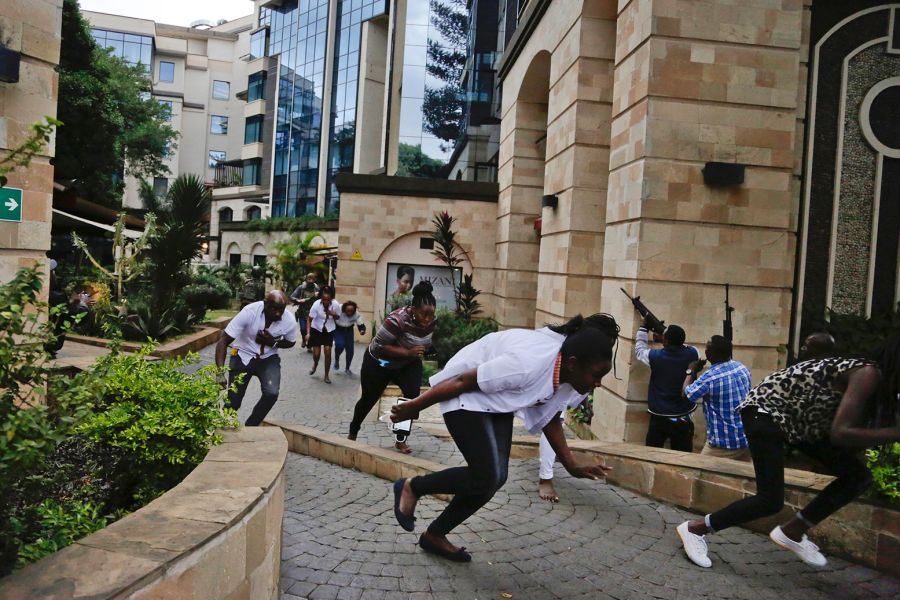
With these latest terrorist attacks in Nairobi, Kenya this past Tuesday (January 15, 2019), there have been many negative images (however realistic and necessary they may be) released for the world to see. In this information age where "shock and awe" is more mantra than mere phrase, sensationalism is the holy grail. 


For me though, there are far too many negative narratives of Africa and the African Diaspora. I understand that there is war and crime and violence all over the world and I reason about these realities here on The Abeng and My Conscious Pen regularly. But if all we discuss are negatives, then the narrative of the Black World, our diaspora, will be taken in as all grim and gloom. 

But Africa and the African Diaspora are on the move, forward and upward, ever. And in this spirit, I am listing some of the most positive happenings in Nairobi, Kenya.


Five Things To Love About Kenya


1. Growing Economy. Kenya boasts the second largest economy in East Africa. (In 2015, Ethiopia, with a much larger population, overtook Kenya as the largest economy in the region). With a GDP growth rate for the past 5 years at around 5%, Kenya's economic growth is solid and above the United States'. And the projection for 2019: 5.8%.


2.  Large, Vibrant Cities. Nairobi is a thriving, dynamic, metropolitan city, where over four million citizens hustle and bustle, repping more than 40 ethnicities. Hundred of  multinational companies and NGOs have their East African/Central African regional headquarters located in Nairobi; on top of all that, it's also a tech and creative hotspot.


3. Creative Kenya. One of the most intriguing qualities about Kenya for me as a writer is the fertile environment for creative storytelling. Young storytellers, whether authors or filmmakers, are encouraged to tell compelling stories, though sometimes faced with a government fight against unsavory content.


In April 2018, The Kenya Film Commission (KFC) promoted "My Kenya, My Story", a mobile competition in which they called on young, independent filmmakers to submit their smartphone, film projects. And the annual Slum Film Festival calls on filmmakers from slums and ghettos in Nairobi to submit their films showcasing stories. 


Some of Nairobi's stories and storytellers:


4. People of African Descent are Repatriating to Kenya Blacks in the African diaspora are moving to Kenya, Nairobi and Mombasa in particular, where we are finding business opportunities in an economic environment that's fertile for entrepreneurs with innovative and sometimes even simple hustles and ideas. For those of us thinking of African repatriation and business, keep in mind that value in any market can be found when a need in that market is identified, qualified and quantified. 
When thinking of making Kenya (or any African country) home, or a business location, due diligence is paramount of course.


From Compton, California, Preshley Knight moved from the United States to Kenya after she became extremely ill. She began hustling cakes on the streets in Nyeri, parlayed that into working for a bakery and now has since started up her own company, Wakanda Express Tours and Africa Immigration Consultants.


5. Kenya's Music Scene


While the attack on Nairobi was indeed horrific, that level of violence is not the norm for this thriving, young city. It's a shame that much of the media mainly report news in a way that commands clicks. While some of Africa is indeed at war within itself, most of Africa is on the rise or booming. As black writers, let's be responsible, balanced, logical, compassionate; let's place news about the Motherland in perspective.  

Sources:
 https://www.aljazeera.com/news/2019/01/kenya-al-shabab-target-190117054949463.html

https://www.theeastafrican.co.ke/oped/comment/Kenya-creatives-industry-movies-support/434750-4382088-5y5f81z/index.html

https://www.kenyanvibe.com/the-kenya-film-commission-calls-for-entries-from-young-filmmakers/

https://www.npr.org/sections/goatsandsoda/2015/09/03/436617865/he-had-one-week-to-make-a-movie-for-the-slum-film-festival

https://www.vogue.com/article/the-kenyan-cool-girls-guide-to-nairobi

https://www.kenyanvibe.com/top-10-hip-hop-artists/


Sunday, September 23, 2018

Perspectives From The African Diaspora: Seven Names in a Lifetime

African Diaspora: Seven Names in a Lifetime
written by Nana Kwabena Osei-Boadi (kongo wattu)


Akan culture says a human being lives to be called seven names in a lifetime.
1. Asukɔnoma - the water fetching bird. Feeds in fluids. Breastmilk, water, porridge, etc.
2. Abɔfra - just a part of creation and at peace and in harmony with nature. Crawling in all fours, eating earth does no harm. They tug on the dog's tail and the dog enjoys it.

3. Akoadaa - Always the slave. The being is up and standing and has learnt to walk and run. Enjoys running errands with the new abilities.
4. Aberaanteɛ (male) - the one who disobeys rules. Puberty and adolescence. Wɔ hyɛ mmra anaa wɔ bra no a ɔnnte.
Ababaawa (female) - the fashionable one. W'aba so. Fantse Akans refer to this stage as Akataasiewa. The one who should be covered and hid. At this stage the gender of the being is taken into consideration for the first time..
5. Opaanii - the worker. Odi paa.
6. Abansiriwa - the senior citizen who protects the walls from collapsing. The experienced one who is in a position to give help with wisdom or saved finances after a long working life.
7. Aberɛwa (female) - the tired one. Nea wabrɛ.
Akɔkora ( male) - the one who is indoors and out of sight. Wakɔ kora.

After having been called these seven names the person after death has a black stool placed in the family prayer room or shrine (nkondwadan mu). When prayers are said and ancestors are listed and called upon to carry the prayers into the spirit world and the creator, their names (akradin) are mentioned.
Food for Thought.
Ase
~ Nana Kwabena Osei-Boadi; Kongo Wattu


African culture is rich in traditions. Many of us in the African diaspora have retained and/or reclaimed many of our traditional customs. 


Sankofa - "Go back and get it"; reconnect with the past and learn from it


Friday, August 24, 2018

Wanted: Abeng Guest Bloggers, Writers and Contributors

Greetings, all Writers, photographers and content creators!

The Abeng and My Conscious Pen is seeking short stories, news reports, articles, profiles and essays from the Black (African) Diaspora. Pieces/work must shed light on the black experience, its struggles and triumphs. Content must be informative, enlightening, inspirational and engaging; writers must express and reveal the human condition. Please keep in mind that an Abeng is a symbol of freedom and Conscious Pen refers to the writer's inward awareness (spiritual, conscientious, psychological) of the outward/worldly object or experience about which he/she is writing.
Sound di Abeng
We are looking for global voices from writers and/or bloggers who wish to utilize our platform so their voices can be heard. Please send submissions to Editor


Tell a friend!
*The Abeng and My Conscious Pen does not currently purchase content; if chosen, your work can serve as a published article for your personal portfolio and each writer WILL retain ALL copyrights. Full credit will be given for your writing.


You can also query Editor about being a regular contributor. Regular contributing writers will be given a profile on our page. 


Tuesday, February 28, 2017

The Abeng Interviews Quai54, Paris Creator Bah-Pna Dahane (Part 2)


The Quai54 Originator: Bah-Pna Dahane Interview 

by Kaya Omodele @TheAbeng


"This tournament was first and foremost a celebration of Blacks at its best on the French soil - a country that owes its freedom to the blood of black soldiers from Africa, America and the Caribbean." ~ Bah-Pna Dahane

Bah-Pna, Ralph 'Big Poppa' Greene and rookie Anthony William Parker

@TheAbeng: Greetings, Bah-Pna. Your reason for keeping the Quai54, Paris tournament a creation and production by Blacks was very Garveyite in principle. What was the biggest challenge you faced in respect to maintaining this goal?

BPD: Hi Kaya. No one knew it was based on Garveyite principle. That was a secret I kept within myself. With French people, you have to be subtle like them. Now after all these years they look back and realize that they had the impression of controlling something. Like Mandela said. "Lead them from the back - and let others believe they are in front."


@TheAbeng: I see that hip-hop was a big influence on you. And, you said you listened extensively to Bob Marley's Redemption Song while planning the marketing campaign for the Quai54. You ever listen to dancehall reggae artist like Capelton, Sizzla, etc.


BPD: I listen to everything. Music is music, but the music most associated with basketball is hip-hop. I am not a very big fan of hip-hop per se. It's a music that has lost its core due to mercantilism. It became less educational and [mostly] entertainment. Today's hip-hop has killed black culture.


@TheAbeng: You have a point. By the way, did you know that the second verse of Redemption Song are words from a Marcus Garvey speech: "Emancipate yourselves from mental slavery...?"

BPD: I guess most of us grew up with Bob Marley's song and learned a lot from Marcus Garvey and Malcolm X's life as well. Malcolm X, who, as you know was a Garveyite, his father was also a Garveyite and most of Malcolm X's teachings were from Marcus Garvey.


@TheAbeng: Yeah, Man. So, which authors have you been reading lately?

BPD: The last three in December were Chimamanda Ngozi Adichie, Chinuah Achebe and Toni Morrison


@TheAbeng: How can we get young brothers and sisters in the black Diaspora to place more value in books (reading) than bling and sneakers?

BPD: It should start at home and we must learn what delayed gratification is all about. Bling-bling and sneakers is a way to be accepted because most of us are lost. Most of us blacks from the Diaspora are losing our roots and essence of being African and proud; therefore we fall into consumerism. We are willing to pa $200 for sneakers that cost $5 to make in China but wont put $20 in a book that will awaken us. Now we wake up and we see that those same Chinese, who make the $5 Jordan that Blacks are lining up to buy, are on the continent controlling our economy...


@TheAbeng: Jah Bless, Bredren. I thank you sincerely for this reasoning and your time.

BPD: Thank you Kaya

If you didn't read the first the first part of this interview catch the Bah-Pna Feature Profile here 


Monday, February 27, 2017

Bah-Pna Dahane Created The Quai54, Paris Streetball Tournament (Part 1)


How Bah-Pna Dahane Created The Quai54, Paris Streetball Tournament

by Kaya Omodele


Don't get it twisted and damn what you heard: Bah-Pna Dahane is the originator, the fire-blazing creator of Quai54, Paris, France's super-eminent street basketball tournament. Period. Born in Chad, Bah-Pna grew up in Lyon, France balling on various courts - swinging tennis racquets and shooting hoops. His love for sports would eventually lead him to earn a Masters degree in International Business and Marketing (he minored in Black Studies and Political Science) from Portland State University in Oregon in 1999. Education prepared Bah-Pna for the corporate sports marketing world and he's travelled extensively; but no matter where in the world his ventures take him, this brother is constantly sounding the Abeng, voicing out against racism wherever he finds it. Armed with the knowledge and spirit of Marcus Garvey, the brother reaches out regularly to uplift the consciousness of brothers and sisters around the Black (African) Diaspora. Such was the case when he envisioned Quai54, Paris.

"France's Racism is different than the United States'; France's racism is more subtle...like a gas you can't smell but will kill you slowly from the inside." ~ Bah-Pna

Being naturally athletic, at eleven years old Bah-Pna was selected as one of Lyon's best, budding tennis players and was awarded membership at an exclusive tennis club. That same year, he discovered the works of Nelson Mandela and also met French Open Champion Yannick Noah; both made big impressions on the Youth.
"Being the only black kid at the tennis club, I will never forget the special attention Yannick Noah gave me. That day in 1986, when he left us he waved good-bye to everyone, except me. He shook my hand, entered his car and winked at me before leaving."


This experience sowed the seed of giving back to his community that would later blossom beautifully in Bah-Pna's life.

Not long after, Bah-Pna developed a burning passion for basketball, which opened him to politically-conscious hip-hop and in turn, exposed him to film-maker Spike Lee's work, for which he has deep, long-lasting respect. Bah-Pna insists that after seeing Do The Right Thing, one can't help but be politically conscious.

As a young man in France, he promptly scrutinized any corporate staff he found short on black employees and executives. The brother blatantly refused to work for or support those companies where he found little or no blacks in the work force.

"I felt the same way as Bugging Out in Do The Right Thing. Where are black people besides the security guards?...
"You feel outraged when you are regularly referred [to] as 'black, but not like other blacks.' In France that statement means you are a sell-out, actually!"

Like many black, inner-city youth, Bah-Pna spent long hours practicing on basketball courts with dreams of making it to the NBA. It was during one of these sessions in 1995, the very day he realized his dream of playing in the League was falling short, that he linked up with Philippe Morin. The Nike executive was promoting the Nike Raid Outdoor Tournament, which duplicated the theme of Spike Lee's Urban Jungle sneaker commercial. Since Bah-Pna had an already growing admiration for Spike, he was naturally drawn to the project. 
Bah-Pna balling with Tim Hardaway

"I teamed up with Nike France only because the Nike Raid Outdoor Tournament was inspired by Spike Lee's Urban Jungle court  featuring Tim Hardaway...     
"...most importantly for many of us who grew up with the knowledge of Marcus Garvey, we were proud that the pan-African [flag] colors were showing up on the Raid Outdoor sneakers. Growing up with conscious rap music, we blacks from the African Diaspora living in France  had a voice and we were able to back it up with the history lessons coming from rap artists like Public Enemy...In most schools in France, we weren't taught about our real history, so those conscious rap artists influenced us to go to the libraries in order to build and strengthen our pride as human beings and people of black origin."
Working in sports marketing with Nike France led to future projects such as the Nike Euro Camp where Bah-Pna worked under the legendary Hall of Fame basketball coach George Raveling in 1997. By the time the Nike Battleground Tournament was up and running in 2002, Bah-Pna had graduated from Portland State and was Nike France's Basketball Marketing Manager, handling all aspects of business and marketing concerning basketball; he'd already worked with Coca-Cola France as a sports marketing consultant/liaison during the FIFA World Cup '98 in France; he'd created, coordinated and promoted a charity event called SLAM ATTITUDE from which proceeds were contributed to funding Dikembe Mutombo's hospital in the Democratic Republic of Congo. All these gigs gave Bah-Pna the necessary experience and contacts, and whetted his appetite, to birth his very own tournament.

The Quai54, Paris: The Mission
"Do not follow in the footsteps of the wise; seek what they sought."~ Osho
For this natural-born activist and socially-conscious brother, creating the basketball tournament that would one day be France's biggest street ball showcase was a social vision as complex as piecing together a 1000-piece, jigsaw puzzle.
"What many may have seen as a simple basketball tournament was for me a real political statement...My goal was to engineer an event created by blacks and operated by blacks, so we could have a real, black men-made event without begging others to do it for us."
It took many months of brainstorming; he knew he wanted this tournament to be black-owned but had no theme yet in mind. Then one day in 2002, while driving through Levallois with Philippe Morin (the now former Nike executive) to meet with the Paris basketball team, they passed a basketball court that became the catalyst for Bah-Pna's epiphany.
"My first time in NY was in 1995 when I won an award to go film my amateur documentary [about] the impact of street basketball in the U.S.A. When we drove past this location in Levallois, it reminded me of New York City..."
The street basketball-theme light flicked on. Bright.
"I drove back to the same playground the next day and started taking pictures. I sat down and I laid out all my inspiration. I started drawing certain logos and promised myself this tournament would be a success the day Jordan Brand sponsors it."
Bah-Pna's major concern was that the tournament had to be black-people oriented; that it must be a beacon for self-reliance of young, black men in France, to "show the white establishment of sports authority that we were more than just sneaker consumers with a bling-bling mentality."
Teach the Youth, Bahps...Talk to them!
With his objectives loaded in his mind, Bah-Pna took careful aim of his goal. He sought out the elders in his business and personal network and soaked in the wisdom they imparted upon him.
Ralph "Big Poppa" Green delivered an email during a meeting at Nike Headquarters in the Netherlands. "Watch out for Africa," the big man said, then shared stories about NBA great Hakeem Olajuwon struggling to complete projects in Nigeria.
Howard White and Kevin "The Katalyst" Carrol both reminded young Bah-Pna to give back to the community. Always!
When Bah-Pna travelled once again to NYC, Rucker Park Tournament's Gregory Marius kicked knowledge, telling him, "Stay true to yourself and they will follow!"
"Lead them from the back; let others believe they are in front."~ Nelson Mandela

From its inception, every detail of Quai54, Paris was a result of Bah-Pna's diligence and strategic planning. He designed down to the name itself. Each component was carefully considered, then laid and stitched with deliberate purpose and meaning. For example, the name "Quai54" itself: Africa consisted of 54 independent countries; Quai means pier or port. "As many know, during the Second World War, the capital of France was in Africa for some time. Black soldiers came from all ports to defend France from the tyranny of Nazism."
Bah-Pna kept tight focus on his mission and goal when he sought initial sponsorship. In his own words, he wanted to make sure the first sponsorship money would come from black-owned companies, and the remainder by anyone who believed in the cause of Black excellence. He was certain that if he gathered enough sponsorship money, he'd still be able to run the tournament if he fell short of landing a major brand's support.
Once Bah-Pna had gathered everything he needed, he searched  for someone to run the tournament - he needed a face, a front man. Eventually, he reached out to Philippe Saint and Jackie Blangonnet, who were both running the "Basketball en liberty" program.
"Philippe Saint was working for the French Basketball Federation. He was dealing with street basketball and was running this open gym in Paris' 13th district where everyone can go and play every day. I contacted him and told him clearly that I was looking for a young African man who loves basketball and hip-hop so he can be [my] front man."
Philippe Saint got back to Bah-Pna with the name of a player who was connected with hip-hop culture, adding that he could swing by the Porte de Choisy at the Hall Carpentier anytime after 6pm for a linkup introduction.
That's how Bah-Pna met Hammadoun Sidibe, the man who became the front man of Quai54, Paris.
Bah-Pna says:
"At the time I was working on the Nike Battleground [tournament] with Tony Parker and for the Nike account, so I couldn't run two events at the same time. When Mr. Saint introduced me to a fellow African [Sidibe], I explained to him that he would be the front man and all he had to do was connect the dots, the hip-hop environment and the basketball one and just carry the tournament as if it was his. All the marketing mix and connections with the officials and the brand was me, because my job at Nike opened many doors...
"It was important to me that black people take their destiny in hand even if it is a tournament." 
"Hypocrites and parasites/will come up and take a bite/and if your night should turn to day/a lot of people would run away..." ~Bob Marley; Who The Cap Fits
History is a carousel; there is nothing new under the sun. As was the case with Marcus Garvey's UNIA, some people only care about what they can get from a situation and so one must be careful about those he invites to his table. Like Garvey, Bah-Pna made the grave mistake of bringing the wrong, so-called African brother into his organization and giving this Judas-thief access. (Editor's Note: This man was not Hammadoun Sidibe; Bah-Pna has not revealed the name of this person to The Abeng.)
When asked why he no longer is part of a tournament he bled, sweated and shed tears over, why he didn't claim it, Bah-Pna responded.
"I had to take responsibility because the person I chose as the Chief Financial Officer ran away with the money. I had no choice than to take responsibility for the loss...
"I should have told the bank that we needed two signatures on the checks for all expenses. I didn't take care of that, so when cash from the sponsors came in, he took most of it and went back to the Motherland with his honey. Life happens, we live and learn...
"I couldn't fight my own black brothers...I decided not to argue and gave the ones I considered co-founders all of it. It was important to have this kind of reaction because we were all interdependent. I was the breadwinner at first, but without their input and connections, we wouldn't have been able to maintain the tournament all these years."
And so, without grudge or vindictive feelings, Bah-Pna relinquished his rights to Quai54.
Bah-Pna reiterates that his purpose in creating Quai54 was to show young black men in France, who believed in "the illusion of inclusion", that they could stand on their own two feet, deliver and be "accepted at our real value". He is adamant about the need for black people to hold ourselves in high esteem and value ourselves as more than consumers; that we see ourselves as creators, entrepreneurs, rulers of our own destinies.
"I wanted this tournament to create hope, so the black kids in France would find inspiration to become general managers, film makers or think in terms of becoming owners...
"Many blacks in France still have a sneaker mentality. You are more praised for the sneaker you have than the books. You are likely to find their room full of sneakers but no library with books."
Amen! Teach the Youth, Bahps; Sound di Abeng!


Read the second part to this interview


Monday, February 15, 2016

Black History: The Haitian Revolution (The Revolt That Birthed a Nation-Part I)

  Black History: The Haitian Revolution (The Revolt That Birthed a Nation-Part I)
                                          by K. Omodele 2016 @TheAbeng

Introduction- Slave Revolts In the African Diaspora
There have been hundreds of slave revolts in the history of the African Trans-Atlantic slave trade. Africans resisted captivity in slave forts, on ships and plantations. In St. John and Guyana, slaves took over whole colonies, tasting freedom temporarily, before being re-conquered and re-enslaved.* Maroons in Jamaica, Surinam and Brazil, and Black Caribs in St. Vincent, fought colonial masters and militias to establish independent/sovereign societies that existed autonomously within individual slave colonies. However, the slave insurrection that is distinctive in achieving an ultimate level of success (freeing the whole slave colony AND forming an independent nation) is the epic Haitian Revolution.

"The revolution is made by ordinary people, not by angels, made by people from all walks of life." ~ Dr. Walter Rodney

The Haitian Revolution was the most successful slave revolt in the history of the so-called New World (i.e. The Western Hemisphere). This revolution significantly affected dynamics in the histories of the West Indies, both Americas, the African Diaspora and Europe. Its events gradually formed a nation, but the revolution's leaders didn't learn their tactics in military academies studying the art of war or political science; nor were they propagating a new economic system or faith. These revolutionaries emerged off fields and fled plantations, first brandishing cutlasses, machetes, hoes and fire; then, with guns, cannons, more fire and cries of freedom, they executed revolts that became a revolutionary war that gave birth to Haiti** - the second independent republic in the Americas and the first nation formed by former African slaves.

Saint Domingue In The 1700s
In 1697, Spain ceded the Western third of Hispaniola to France. The Spanish called their colony Santo Domingo, the French called theirs Saint Domingue. In the 1700s, Saint Domingue was the most prosperous colony in the world and the richest in the entire French Empire. Africans slaved on highly profitable plantations where sugar was the chief crop, but others included tobacco, coffee, cocoa, indigo and cotton. By the end of the century, estimates have the population in Saint Domingue at:

-  30-40,000 Frenchmen (grand blancs and petit blancs)
-  22-27,000 Mulattoes and free Blacks (gens de coleur)
-  500,000+  Black/African slaves

"Nowhere in the West Indies in 1789 was there a greater hell on earth than the French Colony of Saint Domingue..." ~ Dr. Eric Williams
These various classes/castes within the society resented, often despised, each other. Being outnumbered over 10 to one, the Frenchmen, the plantation owners, were constantly on edge to hold on to the balance of power and so kept their African slaves in line by brutalizing them for slight offenses and beheading and racking them for insubordination. But these Whites themselves were divided by class: the grand blancs were the planters and merchants, while the petit blancs were the lower-class workers and laborers.
The Mulattoes and free Blacks had the right to own property but resented the fact that they had little or no legal rights.
Of course, slaves had no rights and so they despised the other classes.

*some leaders and members of these rebellions committed suicide rather than be taken alive and forced back into slavery.
** Haiti ~ Ayti was the Taino Arawak name for the island Columbus "claimed" for Spain, calling it Hispaniola (present-day Haiti and the Dominican Republic. Ayti ,means "Land of high mountains"

The Haitian Revolution Part 2 - Leaders of the revolution: Boukman, Touissant, Dessalines, Christophe, et.al.

References:
Fick, Carolyn E. The Making of Haiti: The Revolution from Below. Knoxville, Tenn., 1990.
James, C.L.R. The Black Jacobins: Touissant L'Ouverture and the San Domingo Revolution. 1938. Reprint. New York, 1963.
Williams, Eric. From Columbus to Castro- the History of The Caribbean 1492-1969
Williams, Eric. History of the People of Trinidad and Tobago. Reprint.
Related Posts Plugin for WordPress, Blogger...

Featured Post

Spoken Word Griots: African Oral Tradition in Caribbean Music (Third Part) - Calypso

Spoken Word Griots: African Oral Tradition in Caribbean Music (Third Part) - #Calypso by K. Omodele African traditions and customs are i...

Popular Posts